

Silk vs Satin Pillowcase: Is Silk or Satin Better for Hair?

- Silk is a fibre. Satin is a weave. The real comparison is mulberry silk against polyester woven in a satin structure.
- On slip alone, the two are close. Satin gets you most of the benefit for a fraction of the price.
- Silk pulls ahead on breathability, moisture and how it feels in a warm room.
- Satin pulls ahead on price and on surviving heavy laundry, which matters if you sweat most nights.
- Neither grows hair and neither treats acne. Both reduce mechanical damage, and that is the honest claim.
Is silk or satin better for hair? On the two things that actually matter, surface smoothness and moisture, mulberry silk has a small real edge. Satin gets you most of that slip for a fraction of the price and survives frequent washing better. If your hair is fine, curly, color-treated or already fragile, silk is worth the extra money. If you sweat at night and expect to change your pillowcase three times a week, satin is often the smarter buy.
We sell both, so we have no reason to pretend one is perfect. Here is the honest version.
Silk vs satin: the difference nobody explains
Silk is a fiber. Satin is a weave.
Silk is a natural protein filament produced by silkworms. Mulberry silk, the grade used in good pillowcases, comes from silkworms fed only mulberry leaves, which gives long, even, uniform filaments. Its quality is measured in momme, a weight unit. Pillowcases usually sit between 19 and 25 momme. Below about 19 the fabric feels thin and wears out fast. Our Soie mulberry silk pillowcase is 22 momme, which is the range most people find durable without feeling heavy.

Satin is a way of weaving thread, not a material. In a satin weave, several threads float over the surface before crossing under, which is what creates that glossy, slippery face. You can weave satin from polyester, nylon, rayon or from silk itself.
This is where most of the confusion online comes from. A silk charmeuse pillowcase is both silk and satin at the same time. But in a shop, "satin pillowcase" almost always means polyester satin. If a listing names a weave and never names a fibre, assume polyester.
So the real comparison is not silk against satin. It is mulberry silk against polyester woven in a satin structure.
Is silk or satin better for hair?
Both work on the same mechanism, and it is mechanical, not biological. Cotton has a rough, absorbent surface. Your head moves dozens of times a night, and hair drags across those fibers. That drag lifts the cuticle, and over months you get frizz, split ends and breakage at the exact points where your hair meets the pillow. A low-friction surface reduces that drag.
Because the slip comes from the weave, the answer to "are satin pillowcases good for hair" is yes, genuinely. A decent polyester satin gives you a smooth surface that hair glides over. Curls hold their shape better. Blowouts last an extra day. Fewer strands on the pillow in the morning.
Where silk pulls ahead is everything happening around the friction. Silk breathes, so it does not trap heat against your scalp. It handles moisture instead of shedding it, which matters if you go to bed with slightly damp hair or wake up sweating. Polyester does neither well: it is hydrophobic, so sweat sits on the surface or runs off rather than being absorbed, and the fabric can feel warmer against your face after an hour.
Now the part the big silk brands leave out. Neither fabric grows hair. Neither stops hormonal thinning. If your hair is shedding more since perimenopause started, a pillowcase reduces mechanical breakage on the hair you already have, and that is all it does. It is a real, small, cumulative benefit, not a treatment. We cover what actually influences menopause-related hair changes separately.
For skin: what actually changes
Two things measurably change, and both are physical.
The first is creasing. Sleep on your side on cotton and you wake with sleep lines pressed into your cheek. On a low-friction surface the skin slides instead of folding. Those lines fade either way, but they fade faster.
The second is absorption. Cotton pulls in whatever you put on your face at night. Silk absorbs less of it, and polyester satin absorbs almost none, so more of your moisturizer stays where you put it.
What does not change: acne is driven by oil, bacteria and hormones, not by fabric. Fine lines are collagen. A pillowcase does not treat either. If your skin is breaking out, how often you change the pillowcase matters far more than what it is made of. We go through the evidence in more detail in our piece on what a silk pillowcase actually does.
Is satin as good as silk?
Honestly, on slip alone, close. On everything else, no, and the gap runs in both directions.
- Breathability. It does not trap heat against your scalp
- Moisture. Absorbs sweat and still feels dry to the touch
- Temperature on a warm night, which is not trivial at 3am
- The feel of it, which is a real reason people keep buying it
- Price. A fraction of the cost for most of the slip
- Washing. Hot water, ordinary detergent, tumble dryer, no complaints
- Durability under a heavy laundry rotation
- Two in rotation beats one silk case drying on a rack
So the question "are satin pillowcases as good as silk" depends entirely on your night. A calm sleeper who washes weekly will notice the silk. Someone changing bedding constantly because of night sweats may get more real-world benefit from two satin cases in rotation than from one silk case that spends half the week drying on a rack.
If you sweat at night, which one should you pick?
This is the scenario nobody selling silk wants to discuss, so here it is plainly.
Silk absorbs moisture and still feels dry to the touch, which is pleasant during a hot flash. But it takes longer to air dry, it cannot go in the dryer, and sweat plus night creams will yellow it over time if you leave it too long between washes. Polyester satin does not absorb, so sweat can feel like it is sitting on the surface, but it washes hot, dries in an hour and shrugs off repeated laundering.
How to choose, based on how your nights actually go
- Sweating occasionally. One silk case is fine, plus a spare for wash day.
- Sweating most nights. Buy two. Many people pair one silk for feel with one satin as the workhorse.
- Sweating heavily, washing every second day. Satin, and put the money you saved into cooling the bed itself.
- Whichever you pick, check the closure. A zip stays on the pillow when you turn. A flap works loose.
And the honest limit: a pillowcase changes what your skin touches. It does nothing about the hormonal reason you are waking up hot. It is a comfort layer, not a fix.
Cost and care over time
Silk pillowcases typically cost several times what a comparable satin one does, and the gap widens once you count care. Silk wants cool water, a pH-neutral or silk-specific detergent, no bleach, no enzyme-based "biological" detergent (enzymes digest protein, and silk is protein), and no dryer. Skip any of that and you get a dull, thin, disappointing square of fabric.
Satin needs a gentle cycle and a cool tumble, and that is roughly it.
We have not run controlled wear tests, so we will not put a number on how many washes either fabric survives. What we can say is that silk shows its age as dullness and thinning at the edges, while polyester satin tends to pill instead. If you want the full routine, we wrote a step-by-step guide on how to wash a silk pillowcase, including what to do when a stain will not shift.
The verdict, and why we sell both
| Mulberry silk (Soie, 22 momme) | Satin (Lustre) | |
|---|---|---|
| What it is | Natural protein fiber | Polyester woven in a satin structure |
| Surface friction | Very low | Very low |
| Feel in a hot room | Cool, stays dry to the touch | Smooth, can feel warmer after a while |
| Moisture | Absorbs sweat, slower to dry | Absorbs almost nothing, dries fast |
| Care | Cool hand or delicate wash, silk detergent, no dryer | Machine wash gentle, low tumble dry |
| Price | High | Low |
| Frequent washing | Ages faster | Handles it easily |
| Best for | Fragile, curly or color-treated hair; dry or sensitive skin | Night sweats, heavy laundry rotation, first-time buyers |

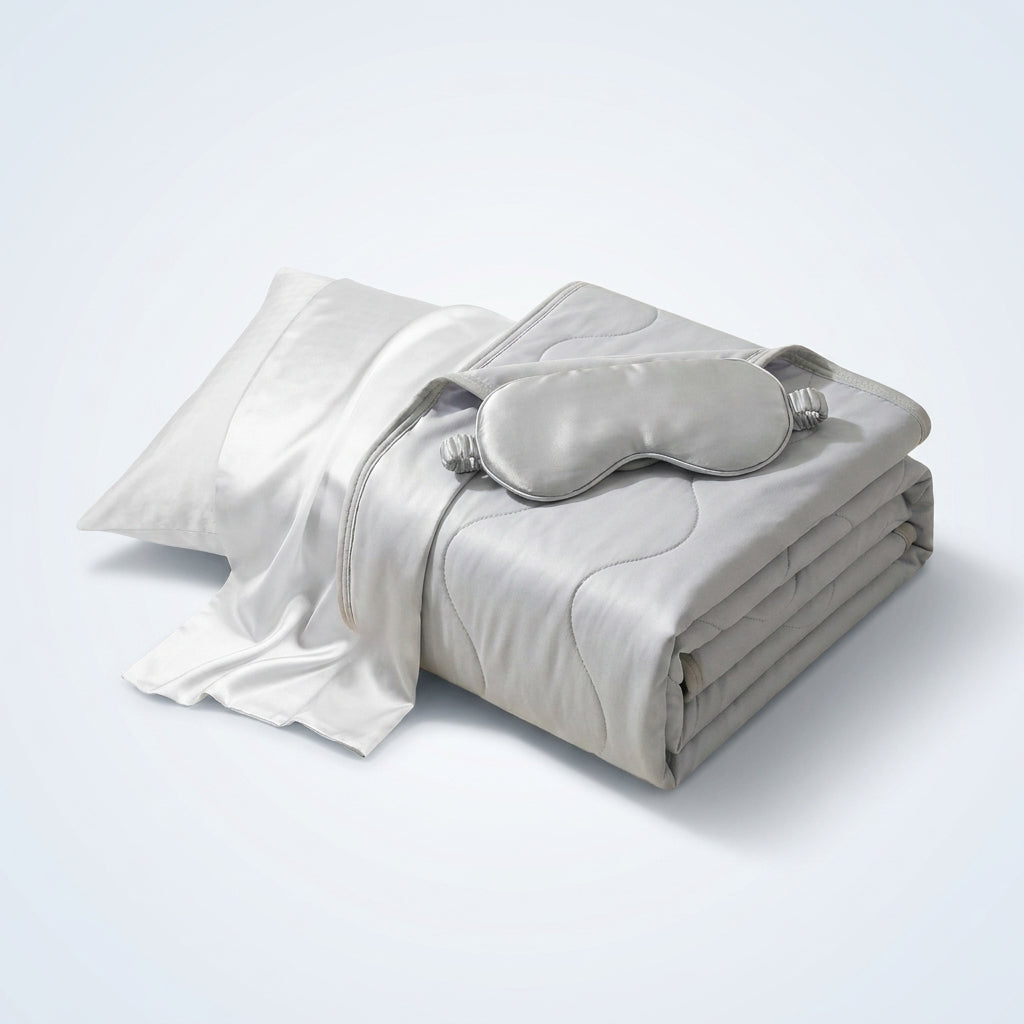
Lustre, polyester satin, sold in pairs
The slip without the maintenance. It washes like anything else in the drum, which is the whole argument for it when you are changing bedding twice a week. Envelope flap rather than a zip, and it comes as a pair so both pillows match.
One practical detail before you buy either: check the closure and the size. Soie comes in four sizes, three of them with a zip, which keeps the case on the pillow instead of riding up the moment you turn over. If you want the slip without the maintenance, Lustre is the sensible starting point. Neither choice is wrong. The mistake is paying silk prices and then washing it like a t-shirt.
FAQ
Which is better, silk or satin?
Silk, on fiber quality, breathability and moisture. Satin, on price and practicality. For hair specifically, the difference is smaller than the price difference.
Are silk or satin pillowcases better for skin?
Both reduce creasing and both keep more of your skincare on your face. Silk feels cooler and manages sweat better, which is why it tends to suit dry or reactive skin.
Is silk or satin better if I run hot at night?
Silk breathes and stays dry to the touch, so it feels better during a flash. Satin dries faster and takes more washing, which matters more if you change bedding often.
Can a satin pillowcase be made of silk?
Yes. Satin describes the weave. Silk charmeuse is a satin weave in silk. If a listing says only "satin" with no fiber named, assume polyester.
How often should I change a pillowcase if I sweat at night?
Every two to three nights while you are sweating regularly, and daily if you are also treating breakouts. That is why owning two makes life easier than owning one.
Sources
- FTC, Labeling requirements under the Textile and Wool Acts
- FTC Consumer Advice, 'Bamboo' fabrics and generic fibre names
- American Academy of Dermatology, Tips for healthy hair
- American Academy of Dermatology, Dry skin: diagnosis and treatment
- Fabric Selection in Atopic Dermatitis: An Evidence-Based Review. American Journal of Clinical Dermatology, 2020
- Cleveland Clinic, Menopause, perimenopause and postmenopause
Researched and written by Claire Bennett. Prices and specifications refer to our own products and were current at the time of writing.
We sell both, so we will tell you which to buy
Silk if your hair is fragile and your nights are calm. Satin if you are changing the case twice a week. Bundle two or more pieces and the discount applies automatically.
Shop sleep & comfort


