

Are Silk Pillowcases Good for Skin? What Silk Actually Does (and Doesn't)

- Silk does two things: it drags less on skin and hair, and it absorbs less of what you put on your face. Every other claim follows from those.
- The hair case is the strongest. Less friction means less breakage and frizz. It has nothing to do with growth.
- For acne it removes one aggravating factor. How often you wash the case matters more than the fiber.
- It softens sleep creases. It does not prevent age-related wrinkles, and no fabric competes with sunscreen.
- It will not stop a hot flash. Those start with hormonal signaling, not with your bedding.
Are silk pillowcases good for skin? Yes, but in a narrower way than the marketing suggests. Silk is smoother than cotton, so it drags less on your face, and it absorbs less of the moisture and product you put on before bed. That is the entire mechanism. It is not a treatment, it will not clear breakouts on its own, and it will not reverse a wrinkle.
Most pages on this topic are written by silk brands, ourselves included. We sell silk pillowcases. So the useful thing we can do is tell you exactly where the effect ends, because that is the part nobody prints.
What do silk pillowcases do?
Physically, three things happen when you swap cotton for silk.
Less friction. Cotton fibers are short and stand up from the surface of the weave. Your face and hair catch on them every time you turn over. Silk filaments are long and smooth, so skin and hair slide instead of snagging. This is measurable in a lab and it is the honest basis of almost every silk claim.
Less absorption. Cotton is thirsty. It pulls in serum, moisturizer and your skin's own oils, then holds them. Silk absorbs less, so more of what you applied stays where you applied it. Less, not none. Silk still takes on moisture.
A cooler first contact. Silk feels cool when you first lie down because it moves heat away from your skin quickly. After a few minutes it reaches your body temperature like any other fabric. That first-contact coolness is real and it is pleasant, but a pillowcase is not a cooling system.
Here is the same information stripped of marketing language.
| The claim you'll see | What is actually happening | Honest verdict |
|---|---|---|
| "Silk clears acne" | Less friction, less absorption of your night-time products | Removes one possible irritant. Not a treatment. |
| "Silk prevents wrinkles" | Fewer sleep creases pressed into your face overnight | Sleep creases fade. Real wrinkles come from age, sun and genetics. |
| "Silk stops hair breakage" | Hair slides across the weave instead of catching | The most defensible claim on this list. Nothing to do with growth. |
| "Silk keeps you cool all night" | Smooth, breathable, cool to the touch at first | Helps at the margin. Does nothing about a hot flash. |
| "Silk is naturally hygienic" | Silk does not clean itself | How often you wash it matters far more than the fiber. |
Do silk pillowcases help with acne?
Do silk pillowcases help with acne? Sometimes, indirectly, and never on their own.
Acne is driven by oil production, pore blockage, bacteria and inflammation. A pillowcase influences none of those directly. What it can influence is mechanical irritation. Pressing your cheek into a rough, damp surface for eight hours and dragging across it every time you turn is a genuine aggravating factor for some people, particularly for acne along the jawline and cheek on the side you sleep on. Reduce the drag and that one factor softens.
Where the evidence actually stands. There is very little published research on silk pillowcases and acne specifically. The nearest real body of work looks at silk garments and atopic dermatitis, which is eczema, not acne, and clothing, not bedding. Even there the picture is mixed: an evidence review in the American Journal of Clinical Dermatology (2020) found the case for specialty fabrics weaker than the marketing implies.
Brands that quote precise-sounding percentages usually commissioned the study themselves and rarely publish the method. Treat those numbers as advertising, including when they come from us.
The part nobody talks about: how often you change it
If your skin is breaking out, the pillowcase you own matters less than how often you wash it. A pillowcase collects sebum, sweat, hair product, leave-in conditioner, sunscreen residue and dead skin, and then you press your face into all of it.
A workable routine:
- Change your pillowcase every two to three days if you are actively breaking out.
- Once a week is the minimum for anyone else.
- Change it after any night you woke up sweating. Silk holds sweat salts and they are drying against skin.
- Own at least two so a wash day never means sleeping on the old one.
- Wash in cool water with a gentle, fragrance-free detergent. Skip fabric softener, which leaves a film on the fiber.
Buying a silk pillowcase and leaving it on the bed for three weeks is worse for your skin than a clean cotton one. That is the trade nobody mentions. The full method, including what a dryer does to silk, is in our guide to washing a silk pillowcase without wrecking it.

Are silk pillowcases good for hair?
Do silk pillowcases help with hair? More than they help with anything else on this page. This is where silk earns its reputation most easily. Hair breakage overnight is friction damage: the cuticle catches on the weave, lifts, and the strand snaps or frizzes. A smooth surface reduces the catching. People with curly, coily, fine, bleached or chemically treated hair usually notice the difference within a week, mostly as less morning frizz and fewer broken hairs on the pillow.
What silk does not do is affect hair growth, hormones or shedding. If you are losing volume through perimenopause, a pillowcase protects the hair you have from mechanical damage and does nothing about the follicle. Those are different problems and only one of them is solved by bedding, and we separate them properly in what happens to your hair during menopause.
If you flip your pillow through the night, buy a case with a zip rather than an envelope flap. A flap works loose as you turn, and half your hair ends up on bare pillow. Three of the four sizes of our Soie case close with a zip for that reason.
Are silk pillowcases good for skin? Wrinkles, dryness and the honest limits
Here is the fair version of the wrinkle claim. When you sleep on your side or front, the pillow presses folds into your face and holds them there for hours. Those are sleep creases. On younger skin they fall out within minutes of getting up. As skin loses collagen and elasticity, they take longer to settle and eventually some of them stop settling entirely.
A smoother, lower-friction surface means shallower creases, so there is a plausible mechanism. What it is not is wrinkle prevention. Wrinkles come from age, sun exposure, genetics and facial movement.

For dry or sensitive skin, the more useful benefit is that silk keeps less of your moisturizer hostage overnight, and gives your skin a smoother surface to sit against. If your skin has become itchier and drier since perimenopause started, the fabric against you for eight hours is a real lever, and we go through it properly in why menopause makes skin itch, especially at night.
Are silk pillowcases worth it?
It depends on what you are buying it for.
Worth it if: you sleep on your side, your hair is fine, curly or color-treated, your skin is dry or sensitive, or you already have a night skincare routine you would like to keep on your face rather than on your bedding.
Not worth it if: you expect it to clear acne, you will not wash it weekly, or you want it to stop night sweats. It will not do any of those.
If you buy one, momme weight is the spec that matters. Momme measures the weight of the silk, and heavier silk lasts longer under repeated washing. The cost is real: silk costs more than cotton and needs cool water, gentle detergent and air drying. A dryer will ruin it faster than anything else you can do to it. If the price is the sticking point, satin is the honest budget answer and we compare the two in silk versus satin, with the drawbacks left in.
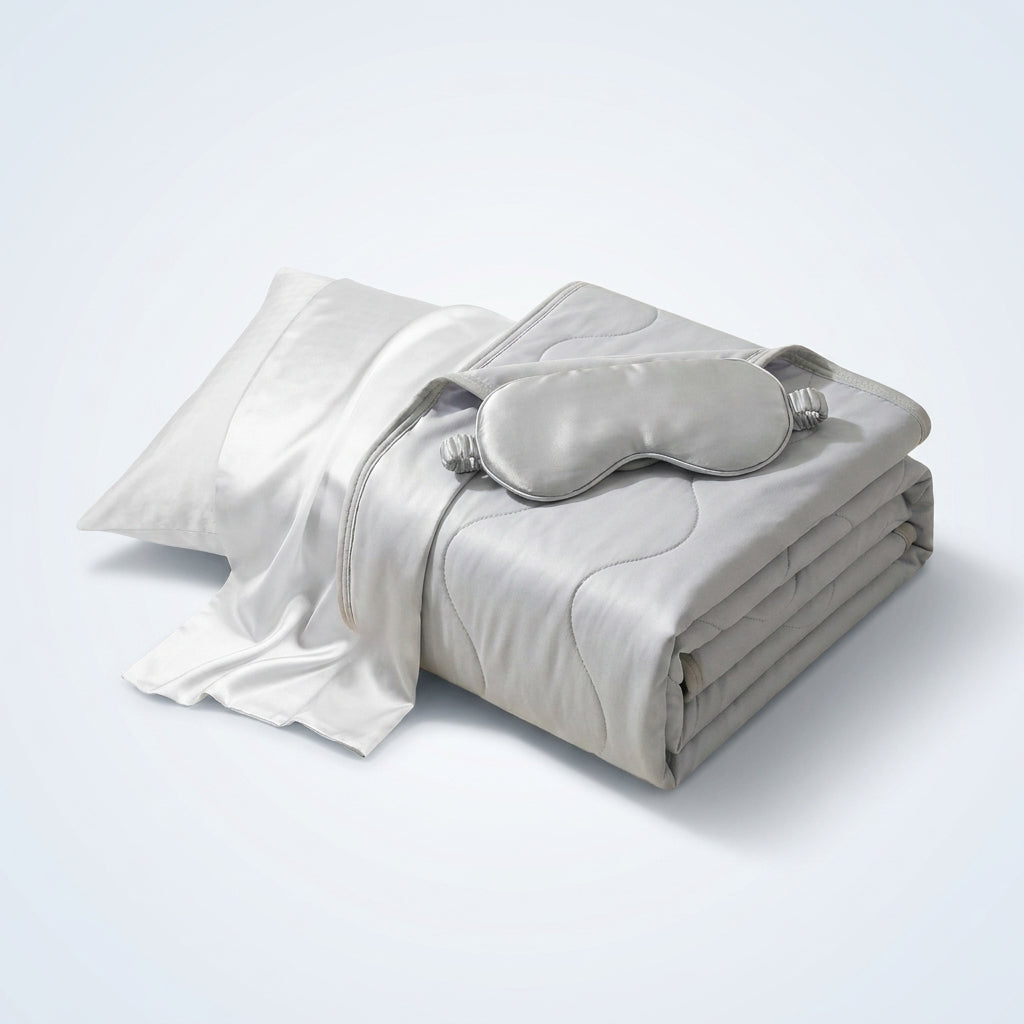
Soie, 22-momme mulberry silk
Twenty-two momme sits at the durable end of what is sold for bedding, which matters because a silk case is judged over a hundred washes, not one night. Four sizes, three of them closing with a zip in the side seam.
Who benefits most
Three groups tend to notice the difference quickly.
People with dry or sensitive skin, because there is simply less rubbing and less product being wicked away.
People with fragile or textured hair, for the friction reasons above.
Women sleeping through night sweats. This one comes with a caveat we would rather state plainly.
Silk will not stop a hot flash. It feels cool against skin and it is gentler on skin that has been damp and then dried out, which is the pattern after a flash. But a flash starts with hormonal signaling, not with your bedding. If you are waking up hot most nights, the pillowcase is one layer of a bed setup, not the answer. Our guide to what is actually happening during a hot flash covers the rest.
If you find fabric on your face uncomfortable at night, a silk sleep mask such as Lune at 16 momme applies the same low-friction logic to the thin skin around the eyes, which is where sleep creases show first.
If you are starting from scratch
- Buy two cases, not one. Rotation is what makes the difference for skin, and one case cannot rotate.
- Pick by closure before you pick by color. If you turn a lot at night, take the zip.
- Set a wash day. Weekly as a floor, every two to three days while your skin is unsettled.
- Give it three weeks before you judge it. Hair shows the change first, usually as less morning frizz.
- Keep your expectations where the evidence is. Less friction and less absorption. Not a treatment.
The rest of the bed matters too. Full range in sleep comfort.
FAQ
What do silk pillowcases do that cotton doesn't?
They create less friction against skin and hair, and absorb less of your night-time skincare. Everything else claimed for silk follows from those two things.
Do silk pillowcases help with acne, or is that a myth?
They can remove one aggravating factor, mechanical irritation, for some people. They do not address oil, bacteria or inflammation. Washing your pillowcase every two to three days will do more for breakouts than switching fibers.
Do silk pillowcases help with wrinkles?
They reduce the sleep creases pressed into your face overnight. They do not prevent age-related wrinkles. Back sleeping and sun protection matter far more.
Are silk pillowcases good for hair as well as skin?
Yes, and the hair case is stronger. Less friction means less breakage and frizz, particularly for curly, fine or color-treated hair. It has no effect on hair growth or shedding.
How often should I wash a silk pillowcase?
Weekly as a baseline, every two to three days if your skin is breaking out, and after any night you woke up sweating. Cool water, gentle detergent, no fabric softener, no dryer.
Sources
- American Academy of Dermatology, Acne: skin care tips
- Cleveland Clinic, Acne
- American Academy of Dermatology, How to reduce premature skin ageing
- American Academy of Dermatology, Tips for healthy hair
- Fabric Selection in Atopic Dermatitis: An Evidence-Based Review. American Journal of Clinical Dermatology, 2020
- Functional textiles for atopic dermatitis: a systematic review and meta-analysis. Pediatric Allergy and Immunology, 2013
- Cleveland Clinic, Menopause, perimenopause and postmenopause
Researched and written by Claire Bennett. This article is for general information and isn't medical advice. If your skin or your sleep is genuinely troubling you, please talk to your doctor.
Silk where it earns its place
A smoother surface for your face and hair, and honest limits printed on the tin. Bundle two or more pieces and the discount applies automatically.
Shop sleep & comfort


)