

Why Do I Get So Hot When I Sleep? Nine Real Reasons (and Fixes)

- Sleep is a cooling process. Overheating is almost never extra heat, it is heat that cannot leave.
- In REM you barely regulate temperature at all, and REM clusters towards morning. That is why 3am.
- A cold room and a hot bed are different environments. The mattress is the layer no airflow reaches.
- For women over 40 the most likely single cause is a thermoneutral zone narrowed by falling estrogen.
- Drenching sweats with weight loss, fever, or right after a new prescription are a doctor's question, not a bedding one.
- Why do I get so hot when I sleep? Start with body temperature
- Reason 1: the room and the bed itself
- Reason 2: bedding that traps heat
- Reason 3: hormones, perimenopause and hot flashes at night
- Reasons 4 to 9: the rest of the list
- Hot at night but not sweating?
- Hot then cold, and hot legs and hands
- When to talk to a doctor
- How to stop overheating at night
- FAQ
Why do I get so hot when I sleep has nine plausible answers rather than one. Your body is supposed to cool down at night, and anything blocking that leaves you overheating: a warm room, heat-trapping bedding, alcohol, certain medications, illness, and for women over 40 most often the hormonal shifts of perimenopause. Below is each cause, the biology in plain terms, and when the answer is a doctor rather than a duvet.
This article is for general information and isn't medical advice.
Why do I get so hot when I sleep? Start with body temperature
Sleep is a cooling process. Your core temperature follows a circadian curve, peaking in the early evening and falling by roughly one degree Celsius overnight, reaching its lowest point a couple of hours before you naturally wake.
That drop is not a side effect of sleeping. It is part of what starts sleep. To lose the heat, your body opens the blood vessels in your hands, feet and face, which is why warm feet make people drowsy. Heat moves from your core to your skin, then into the room. If it cannot get into the room, it stays in you.
So the strange thing about a body temperature rise when sleeping is that it usually is not your body producing more heat. It is heat failing to leave. Almost every cause below is a variation on that.
One more piece of biology explains a lot. During REM sleep, the phase where most dreaming happens, your temperature regulation is largely switched off. You do not shiver and you do not sweat efficiently in REM, so you drift toward the temperature of your surroundings. REM periods get longer through the night and cluster in the early hours, which is one reason people wake up hot at 3 or 4 a.m. rather than at midnight.
Reason 1: the room and the bed itself
The most common answer is also the least interesting. Most bedrooms are too warm. The range usually recommended for sleep is around 60 to 67°F (16 to 19°C), and most people sleep closer to 72°F.
If you have wondered why is my bed so hot when the room feels fine, a bed is not a room. Under the covers you are inside a sealed pocket of your own body heat, with a mattress underneath that cannot vent. Memory foam is the usual suspect: dense, molded around you (which increases contact area) and storing heat rather than passing it through.
Reason 2: bedding that traps heat
Two properties matter and people confuse them. Breathability is whether air can pass through the fabric. Moisture handling is whether sweat can move away and evaporate.
Polyester and microfiber score badly on both, which is why cheap sheets feel clammy. Cotton breathes well but absorbs moisture and holds it, so it feels pleasant early and damp later. Linen, bamboo and silk sit at the better end. Duvet weight matters too: one heavy duvet used year-round causes a lot of overheating from May onward.
Count your layers, too. A laminated plastic mattress protector undoes good sheets by itself: it is a waterproof membrane sitting directly under you, cancelling everything you spent on the fabric above it.
Reason 3: hormones, perimenopause and hot flashes at night
For women in their forties and fifties this is the single most likely explanation, and it deserves more than the passing mention it usually gets.
Your hypothalamus works with a thermoneutral zone, a range of core temperatures it accepts and does nothing about. Estrogen helps set the width of that zone. As estrogen falls and fluctuates through perimenopause, the zone narrows sharply. A rise in core temperature that would previously have gone unnoticed now crosses the upper threshold, and your brain responds as if you are genuinely overheating: blood vessels near the skin dilate, you flush across the chest, neck and face, and you sweat. When the sweat evaporates, you overshoot the other way and end up shivering under a wet nightshirt.
At night the same event is called a night sweat rather than a hot flash. The mechanism is identical. What differs is that you are wrapped in insulation and asleep, so the heat has nowhere to go and you often notice only once you are already awake and damp.
Two things worth knowing. This often begins several years before periods stop, which is why women in their early forties are frequently told they are too young for it. They are not. And it does not last forever, though longer than most people expect: the figure most often quoted puts the median duration at around seven years, with a wide spread either side.
For the full picture of a flush, see what's really happening during a hot flash. Hormone therapy and several non-hormonal prescription options exist and work well for many women. That is a conversation with your doctor, not a shopping decision.
Reasons 4 to 9: the rest of the list
4. Alcohol in the evening. Alcohol dilates your blood vessels, so you feel warm and fall asleep fast. A few hours later, as your body metabolizes it, you get a rebound: raised heart rate, broken sleep and sweating. It also makes hot flashes more likely in women who already get them.
5. Food and timing. A large or spicy meal close to bedtime raises your metabolic rate at exactly the moment your body is trying to shed heat. Late caffeine works against the same process.
6. Medications. Several common ones list night sweats as a side effect, including certain antidepressants, some diabetes and blood pressure medicines, steroids and some pain relievers. If your overheating started within weeks of a new prescription, mention it to your doctor or pharmacist. Do not stop anything on your own.
7. Stress and anxiety. A stress response raises heart rate and core temperature and can trigger sweating in your sleep. Anxiety dreams and night sweats often travel together, in both directions.
8. Illness and thyroid. Any infection with a fever produces sweating, usually as the fever breaks. An overactive thyroid raises your metabolic rate around the clock, and heat intolerance is one of its classic signs. Obstructive sleep apnea is another common and under-recognized cause of waking hot and sweaty.
9. You may simply run hot. What is a hot sleeper? Someone whose metabolic rate, body composition and skin blood flow mean they retain more heat than average at rest. If this has been true since you were twenty, you are in this group, and the fix is environmental rather than medical.
Hot at night but not sweating?
Being hot at night but not sweating is common and usually less concerning than the reverse. It means you are uncomfortably warm rather than mounting a full cooling response: the room or the bedding is wrong and your body is coping. Early perimenopause can present this way too, as flushes without much sweat.
Feeling warm but no fever is worth checking with an actual thermometer, because your sense of your own temperature at 3 a.m. is unreliable. If the reading is normal and you still feel hot, heat retention is likelier than infection.
Hot then cold, and hot legs and hands
The hot-then-cold pattern is the signature of a vasomotor episode. Heat, sweat, evaporation, chill. If you wake hot, throw the covers off, and are shivering fifteen minutes later, you have most likely just had a night sweat, even if you never noticed being drenched.
Hot legs and burning feet have their own list, including restless legs and circulation or nerve issues, and are worth raising with a doctor if they are persistent and localized rather than part of a whole-body flush.
When to talk to a doctor
Most overheating at night is bedding, room temperature or hormones. See a doctor if you have:
See a doctor if you have: drenching night sweats that soak through nightclothes or sheets several nights a week; sweats alongside unexplained weight loss, persistent fever or swollen glands; symptoms that began within weeks of starting a new medication; loud snoring, gasping or pauses in breathing reported by a partner; or sweats that are new and unexplained if you are outside the perimenopausal age range.
These can point to infection, thyroid problems, sleep apnea or, less commonly, other conditions worth investigating. Getting it checked is straightforward.
How to stop overheating at night
The short version, in the order that gives the biggest return:
In the order that gives the biggest return
- Bring the room down. Low sixties Fahrenheit, and ventilate in the evening rather than the afternoon. Without air conditioning this takes sequencing, and we set out the whole order in how to sleep cool without AC.
- Fix the mattress surface first. It is the layer you cannot escape.
- Split the bed. Separate duvets end the thermostat argument and let you use a lighter one.
- Change the fabric touching you, especially at the pillow, where your face spends eight hours.
- Keep a spare top and pillowcase at the bedside. A sweat then costs five minutes, not an hour.
- Move the last drink and the last big meal earlier.
- Warm shower, not cold. It sends blood to the skin and helps you shed heat afterwards.
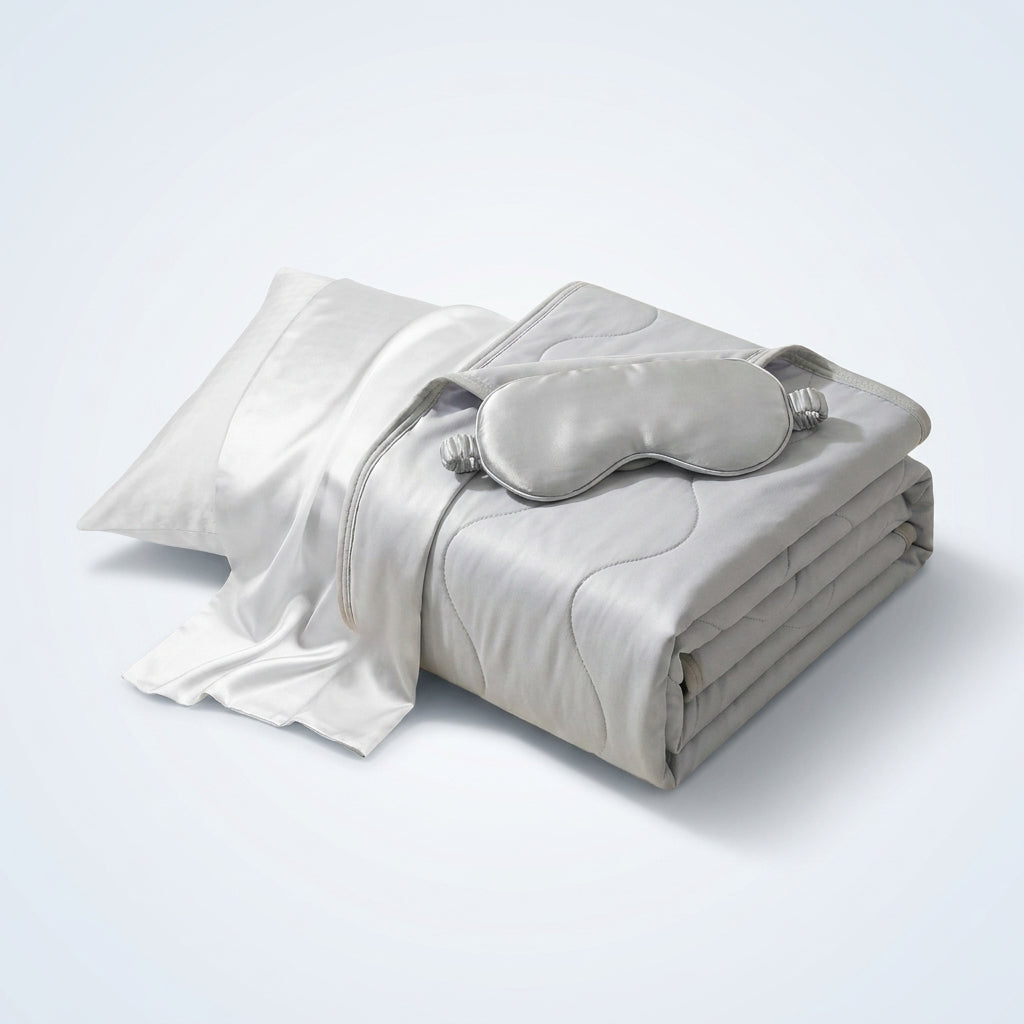
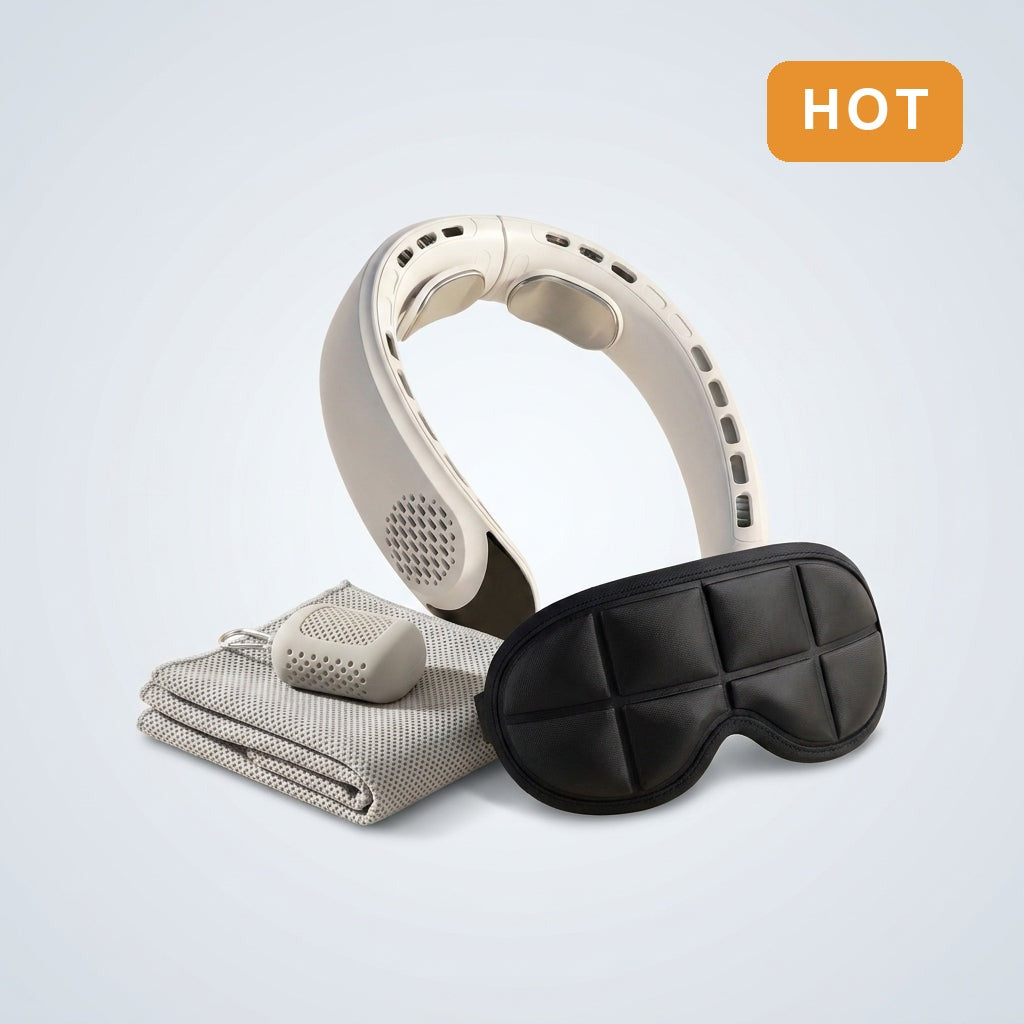
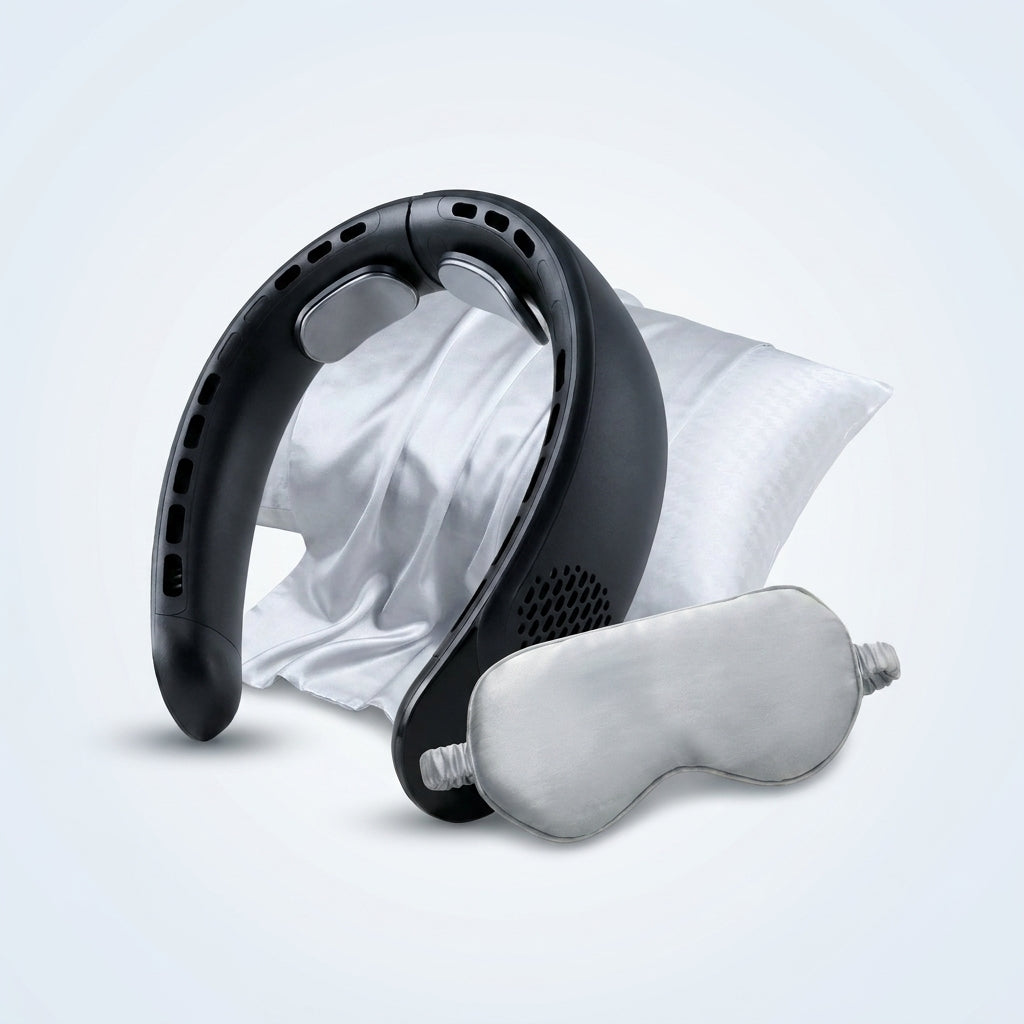
If you would rather change the equipment than the habits: a breathable topper such as our Frost Flat bed mat, a lighter double-sided Zephyr duvet, an air-mesh-sided Crest contour pillow, or the shredded-fill Cumulus if airflow matters more to you than neck support, under a 22-momme silk pillowcase, and a quiet bedside fan like the Plume for the minutes after a flush. None of these touch the cause. They change how fast you get back to sleep, which over a bad month is what actually wears you down. For heat that arrives while you are awake rather than in bed, a wearable is a different tool, and we compared ours in the best neck fans. If the pattern is specifically hot, then soaked, then shivering, that is a vasomotor symptom rather than a warm bedroom, and night sweats and menopause is the guide to start from. If broken nights have turned into not being able to fall asleep at all, we covered that in menopause insomnia.

Frost Fitted, ice-bead mattress pad
You compress the surface you lie on, which closes off the only route heat had. No fan, no open window and no duvet change reaches it. This is the one intervention that works on that layer directly.
FAQ
Why do I get hot when I sleep but not during the day?
Sleep depends on shedding heat, and bedding blocks it. In the day you can move, change clothes and stand in a draft. In bed you are wrapped in insulation over a mattress that cannot vent.
Why am I so hot at night all of a sudden?
Sudden changes usually have a trigger: a new medication, more alcohol, a warmer season, illness, or the start of perimenopause. If it began within weeks of a new prescription, ask your pharmacist.
Why do I wake up hot at 3 a.m.?
REM sleep clusters in the second half of the night and your temperature regulation is largely suspended during it, so you drift toward the temperature under your covers. Night sweats cluster in these hours too.
Why do I get hot while sleeping even in a cold room?
The room and the bed are different environments. A cold room plus a heavy duvet and a heat-retaining mattress still leaves you inside a warm sealed pocket.
Sources
- National Heart, Lung, and Blood Institute, Sleep deprivation and deficiency
- Cleveland Clinic, Sleep basics
- Cleveland Clinic, Menopause, perimenopause and postmenopause
- ACOG, The menopause years
- Cleveland Clinic, Hyperhidrosis
- Ready.gov, Extreme heat
Researched and written by Claire Bennett. This article is for general information and isn't medical advice. Never stop a prescribed medication on your own.
Heat that cannot leave is the whole problem
Nine causes, one mechanism. Bedding does not touch the cause, it decides how fast you get back to sleep. Bundle two or more pieces and the discount applies automatically.
Shop sleep & comfort


)