
Cool Pillows for Night Sweats: What Actually Keeps Your Head Cool

- Airflow beats a cold surface. Cool-touch lasts minutes. Breathable construction works all night.
- Solid memory foam is the worst performer, and both of our pillows are memory foam. One is shredded, one is not, and that is the whole difference.
- The cover matters as much as the fill. A sealed knit undoes a good pillow.
- A pillow does nothing about why you sweat. It decides whether recovery takes ten minutes or forty.
- The pillowcase is the cheapest upgrade here and the one people skip.
Cool pillows for night sweats work by letting heat and moisture escape from around your head instead of storing them. Two things decide whether a pillow does that: what the fill is made of, and how freely air moves through it. A surface that feels cold in the shop is a much smaller factor than most people expect, because that sensation lasts a few minutes and then your head wins.
A note on why this article exists. The biggest guide on this subject runs roughly 6,500 words under the heading "for night sweats" and never once discusses night sweats, hot flashes or perimenopause. It means hot sleepers, which is not the same thing. A hot sleeper is warm all night at a steady level. A night sweat is a spike: you were fine at midnight, at 3 a.m. you are soaked, and twenty minutes later you are cold and damp. The pillow you want for that second pattern is chosen differently.
Why your pillow turns into a heater
Your head produces a surprising amount of heat, and it does it into a small area you barely move for hours. The pillow's job is to get that heat out. Most pillows are built to do the opposite.
Solid memory foam is the main culprit. It is dense by design, because density is what gives it the slow, molding feel people buy it for. Density is also what blocks airflow. Heat leaving your scalp has to conduct its way through a solid block instead of being carried away by moving air, and it cannot, so it accumulates in the few inches directly under your head. That is why a memory foam pillow can feel pleasant for ten minutes and unbearable at two in the morning.
Then add moisture. Night sweats put damp into the pillow, the cover traps it, and wet fill loses whatever breathability it had. By the third night of a bad week the pillow is a warm, slightly damp sponge with your head on it.
Down and down-alternative behave differently but end up somewhere similar. They are lighter and more open, so they start cooler, but they compress and wrap around your head, sealing off the sides.
Cool-touch surface or genuinely breathable? The difference that matters
This distinction is worth more than every marketing term in the category, and almost nobody spells it out.
- A layer that pulls heat from your skin faster than cotton on first contact
- Real physics, and finite: minutes to half an hour, then it is just fabric
- Gives you the cold-hand moment in the shop
- Flipping buys the same window again, which is exactly why people flip
- Open fill, ventilation channels, a cover that lets air pass
- Nothing about it feels dramatic in a shop
- Keeps heat and moisture moving away for the whole night
- This is the part you actually sleep through
If you have to choose, choose the second. The ideal is both: a surface that takes the edge off when you lie down, over a structure that keeps working at 3 a.m.
What a cooling pillow will not do
We sell pillows, so take this in the spirit it is offered.
A pillow does nothing about the cause of night sweats. If yours are driven by the hormonal changes of perimenopause and menopause, the mechanism sits in your brain's temperature regulation, not in your bedding. Falling and fluctuating estrogen narrows the range your body accepts as comfortable, so a small rise in core temperature triggers a full cooling response: blood rushes to the skin, you flush, you sweat. Your pillow is not part of that chain.
What a pillow changes is the recovery. It decides whether the surface under your head is a heat trap that keeps the episode going, or a surface that lets you cool down and get back to sleep in ten minutes instead of forty. Over a bad month that difference is real, and it is worth spending on. It is just not a fix for the underlying cause.
If the sweats are new, drenching, one-sided, come with fever or weight loss, or you are not in the perimenopausal age range, that is a conversation with your doctor rather than a shopping decision.
How to choose cool pillows for night sweats
Five things to check, in order of how much they matter.
Five checks, in order of how much they matter
- Fill structure. Shredded foam, latex with pinholes or fibre fill beats a solid block every time. If it is one solid piece, look for ventilation channels.
- The cover. This is the layer touching you, and a sealed knit undoes a good fill. Removable and washable.
- Loft and firmness for your position. A pillow that is wrong for your neck will not get slept on however cool it is.
- Washability. Sweat means laundry. Check whether the fill itself washes or only the cover.
- Whether you can flip it. Two working sides means two cool-touch windows a night.
Contour or cloud-soft: which suits you
This is the choice most people get stuck on, and it is less about temperature than about how you sleep.
First, the disclosure this section needs, because the section above told you solid memory foam is the worst performer for airflow. Both of our pillows are memory foam. They differ in the form it takes, and that difference is exactly what the last five hundred words were about.
The Cumulus is filled with shredded memory foam, which is the version that meets the criteria above. Air moves through the gaps between the pieces instead of stopping at a solid wall, so heat is not held in one place under your head. It moves with you, which means you shift onto a cooler patch through the night without waking up properly to do it. A side zip lets you take filling out or put it back until the height matches how you actually sleep, and the cover comes off and goes in the machine, which matters more than anything else on a week of sweats. The trade-off: it gives less structured neck support, so if you wake with a stiff neck, this is not your pillow.
The Crest is a contoured solid block, two raised waves with a dip between them, and we are not going to pretend that is the better choice on airflow. It is not. What it is better at is holding your neck in one position all night, which is why side and back sleepers who wake with a sore neck keep choosing it over soft pillows that collapse by midnight. Open air-mesh side walls let some heat out of the edges, and that helps, but a solid core is still a solid core. Your head also stays in one spot, so that spot warms up and there is no cool patch to roll onto.
So the honest ranking, for night sweats specifically: Cumulus first. Choose Crest anyway if your neck decides the argument, and if you do, put the effort into the cover and the pillowcase, because with a contour pillow that surface is doing most of the work.

Crest, contoured, with air-mesh sides
We are not going to pretend a solid contour block is the better choice on airflow. It is not. What it is better at is holding your neck in one position all night. Open air-mesh side walls let heat out of the edges, and that helps, but a solid core is still a solid core.
The pillowcase multiplier
The pillowcase is the cheapest upgrade in this whole article and the one people skip.
Whatever the pillow does, your face and hair are in contact with the case, not the pillow. A thick cotton case absorbs sweat, holds it against your skin and takes a long time to dry, which is why you can wake with a cold, clammy patch under your cheek an hour after the flush has passed.
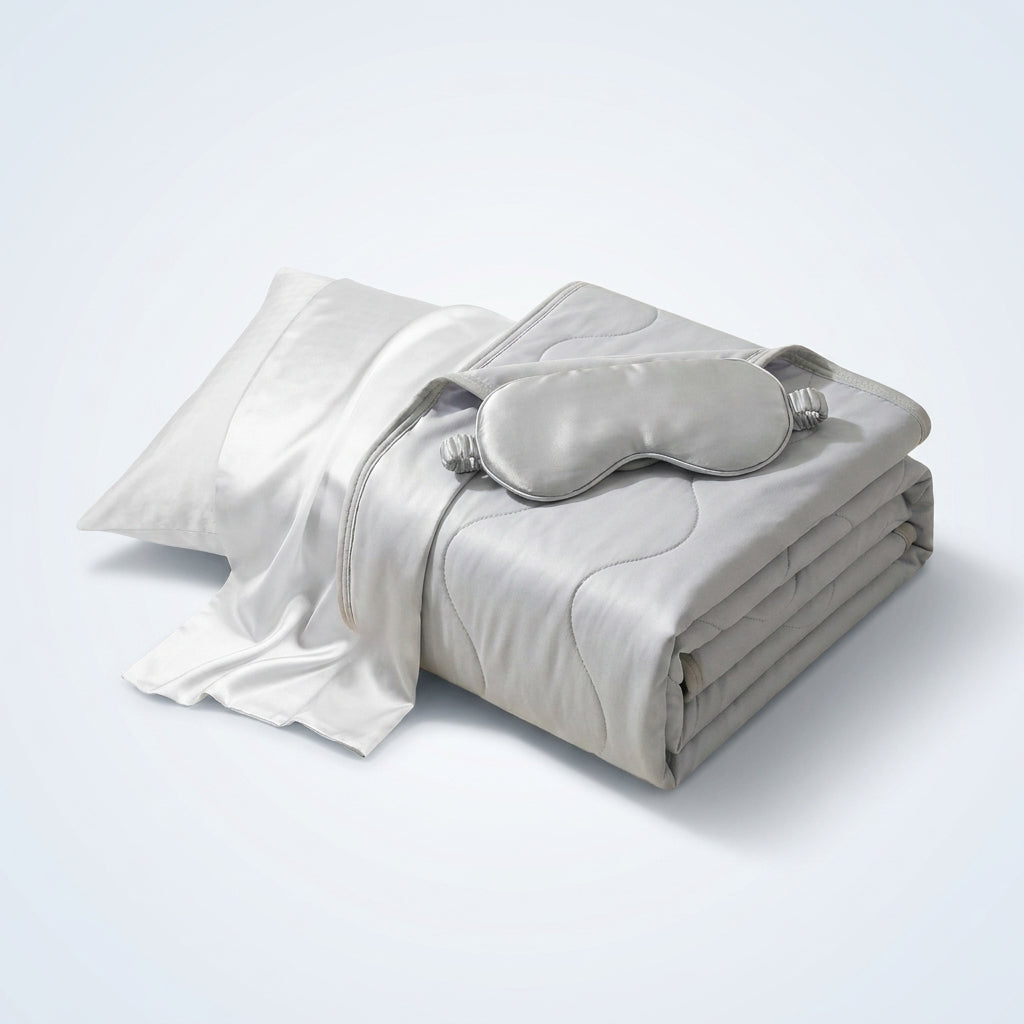
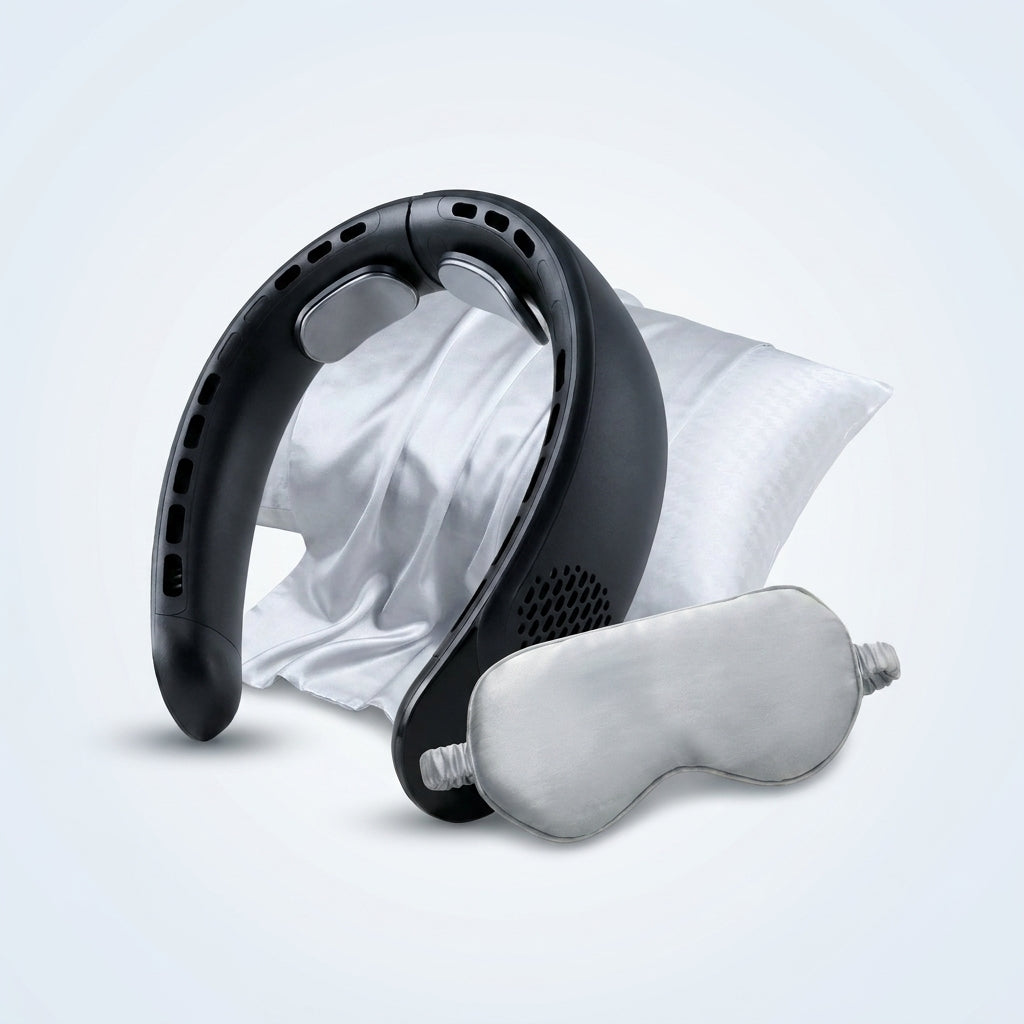
Silk behaves differently. Our Soie is 22-momme mulberry silk: smooth, cool to first touch, and far less absorbent than cotton, so it does not hold moisture against you in the same way. It also drags less on skin and hair, which matters if you are turning over repeatedly. The honest limits are cost and care, since silk needs cool water and no dryer.
If that sounds like too much upkeep, the Lustre satin case gives you most of the smoothness at a fraction of the price and survives normal laundry. It is less breathable than silk, so it is the pragmatic choice rather than the best one.
Whichever you pick, own at least two. With night sweats you want a dry case to swap to at 3 a.m. without stripping the bed. The same logic applies to breathable sheets for night sweats: the best bed sheets for night sweats are the ones you have a spare set of.
Cooling the rest of the bed
A cool pillow inside a hot bed is a small island. If overheating wakes you regularly, the bigger levers are the mattress surface, the duvet and the room, in that order. Our sleep comfort collection covers the layers, and if you want to understand what is actually driving it, read why you get so hot when you sleep. For the biology of the flush itself, we covered that in what's really happening during a hot flash.
FAQ
What is the best cooling pillow for night sweats?
The one with the most open fill that still supports your neck properly, in a washable, breathable cover. Structure beats a cold-feeling surface over a full night.
Do cooling pillows for night sweats actually work during a hot flash?
They shorten the recovery rather than prevent the flush. Many people find they get back to sleep faster because the surface under their head is not holding the heat.
How often should I wash my pillowcase if I get night sweats?
Every two or three nights during a bad stretch, and more if you can face it. Keep two or three cases in rotation so a dry one is always to hand.
Is memory foam bad for night sweats?
Solid memory foam is the worst performer for airflow, because its density blocks the movement of air around your head. Shredded or ventilated versions are far better.
Should I get a contour or a soft pillow?
For heat alone, the soft shredded-fill one, because air moves through it and you can roll onto a cool patch. Choose the contour anyway if you wake with a sore neck, and then spend the difference on a breathable cover and pillowcase.
Sources
- Cleveland Clinic, Menopause, perimenopause and postmenopause
- ACOG, The menopause years
- Cleveland Clinic, Sleep basics
- National Heart, Lung, and Blood Institute, Sleep deprivation and deficiency
- Cleveland Clinic, Hyperhidrosis
Researched and written by Claire Bennett. This article is for general information and isn't medical advice.
A cool pillow inside a hot bed is a small island
If overheating wakes you regularly, the mattress, the top layer and the room are bigger levers than the pillow. Bundle two or more pieces and the discount applies automatically.
Shop sleep & comfort


