


Does Menopause Cause Itchy Skin? Why It Happens, Especially at Night

- Falling estrogen means less collagen, less oil, a weaker barrier. Dry skin itches, and that is the whole chain.
- It is worse at night because skin temperature and water loss both rise while cortisol bottoms out. Nothing imaginary about it.
- The intense phase usually eases in postmenopause. The dryness underneath tends to stay.
- Moisturising within three minutes of a shower is the single highest-value habit here.
- What touches you for eight hours matters. Damp cotton is rougher than dry cotton, which is why "wear loose cotton" is incomplete advice.
Does menopause cause itchy skin? For a lot of women, yes. As estrogen falls, skin makes less collagen and less of the oil and lipids that hold water in, so it gets drier, thinner and more easily irritated. Dry skin itches. It tends to be worst in the evening and overnight, which is also when there is nothing to distract you from it.
This article is for general information and isn't medical advice.
Is itching a sign of menopause?
Itching is a recognized symptom of the menopause transition, though it rarely gets listed alongside hot flashes and broken sleep. It usually shows up as:
- A general dryness and tightness, especially on the shins, forearms, back and face
- Itching without any visible rash
- Skin that reacts to things it never used to react to: wool, a new detergent, a hot shower
- For some women, formication, a crawling or prickling sensation like something moving on the skin
Is itchy skin a sign of menopause on its own? Not reliably. Plenty of other things make skin itch: eczema, thyroid problems, iron deficiency, liver or kidney issues, diabetes, some medications, and simply winter. The pattern that points toward hormones is itching that arrives in your forties or fifties alongside other changes, such as irregular periods, night sweats or disturbed sleep.
Worth a doctor's appointment rather than a fabric change: itching severe enough to keep you awake most nights, itching with a rash, unexplained weight loss, yellowing skin, or itching confined to one area, particularly the vulva, where it needs proper assessment rather than guesswork.
Does menopause cause itchy skin? What estrogen has to do with it
Can menopause cause itchy skin directly? Not quite. The connection runs through estrogen, and estrogen does more for skin than it gets credit for. Skin has estrogen receptors, and when levels drop, several things shift at once.
Collagen. Skin can lose a substantial share of its collagen in the first years after menopause, with the sharpest fall early on. Less collagen means thinner, less resilient skin.
Oil and lipids. Sebum production drops, and so do the ceramides and fatty acids that make up the skin barrier. That barrier is what stops water escaping.
Water loss. With a weaker barrier, more moisture evaporates through the skin. Dry skin has more exposed nerve endings and a lower threshold for itch.
Sensitivity. A compromised barrier lets irritants in more easily. Fragrance, sulfates and hot water that never bothered you before can now start something.
None of this is damage in the sense of injury. It is a change in how the skin is built, and it responds well to being treated gently. That is the useful part of understanding the mechanism: itching from a dry, thinned barrier gets better with moisture and less friction, and it gets worse with hot water, harsh soap and rough fabric.
Does menopause itching go away?
Usually it eases, but it rarely disappears entirely on its own.
Itching linked to the transition often settles once hormone levels stabilize in postmenopause, which for most women takes a few years. What does not reverse is the underlying dryness, because the skin's oil production stays lower than it was. So the intense, unpredictable itching tends to fade, while a baseline of drier skin stays with you and needs managing.
Even itchy ears?
Yes, and this catches people out. Are itchy ears a sign of menopause? The skin lining the ear canal is thin, and it relies on ear wax and natural oils to stay comfortable. When oil production drops, that canal dries out and itches, and the more you poke at it with a cotton bud, the more the skin gets irritated and the cycle repeats.
The same thing happens in other thin-skinned places: eyelids, lips, the skin around the eyes, and the vulva. If ear itching comes with pain, discharge or hearing changes, that is a doctor visit, not a moisturizer problem.
Why itching feels worse at night
There is nothing imaginary about this. Several things line up against you after dark, and they do not arrive at the same moment.
Skin temperature rises. Blood flow to the skin increases in the evening as your core temperature drops for sleep. Warm skin itches more.
Water loss peaks. Transepidermal water loss is higher overnight, so skin is at its driest in the small hours.
Cortisol bottoms out. Your body's natural anti-inflammatory hormone is at its lowest overnight, so inflammatory itch has less holding it back.
Nothing distracts you. Daytime itch competes with everything else you are doing. At 3am it has the floor to itself.

Night sweats add two problems. Sweat leaves salt on the skin, which is drying as it evaporates. And a damp cotton nightshirt or pillowcase clings and rubs, which is straight mechanical irritation on a barrier that is already struggling. If you are waking hot and then itchy, this is very likely the loop you are stuck in, and our guide to what is really happening during a hot flash covers the temperature side of it.
Scratching makes it worse. Scratching damages the barrier, which triggers more itch. This is the itch-scratch cycle, and breaking it at night is most of the battle.
Fabric matters: what touches your skin for eight hours
Almost every article on menopausal itching says "wear loose cotton" and stops. That is not enough, because cotton has a specific failure mode here: it soaks up sweat and holds it against you, and damp cotton is rougher than dry cotton. If you are sweating at night, the advice is incomplete.
What actually matters is friction, moisture handling and what is left in the fabric after washing.
| Fabric | Friction against skin | With night sweats | Verdict for itchy skin |
|---|---|---|---|
| Cotton, tight weave | Moderate, higher when damp | Absorbs and stays wet | Fine when dry, poor once you sweat |
| Wool | High | Wicks well | Usually the first thing to remove |
| Polyester jersey | Low friction, poor breathability | Traps heat, holds odor | Comfortable to touch, hot to sleep in |
| Bamboo viscose | Low | Breathes and dries reasonably fast | A solid everyday option |
| Silk, high momme | Lowest | Absorbs less, dries fast, stays smooth | The gentlest surface for face and hair |
Two changes are worth making before anything else.
The pillowcase, because your face and neck press into it for eight hours and facial skin is thin. It is not doing anything to your hormones, and it will not stop the itch on its own. It removes one source of friction, which on already fragile skin is a bigger deal than it sounds. We wrote a full honest breakdown of what silk does and does not do if you want the limits spelled out.

Soie, 22-momme mulberry silk
Nothing on the surface to catch on, and it holds on to less of the moisturiser you put on before bed. It removes one irritant from a night that already has several. It does not treat the cause, which is hormonal.
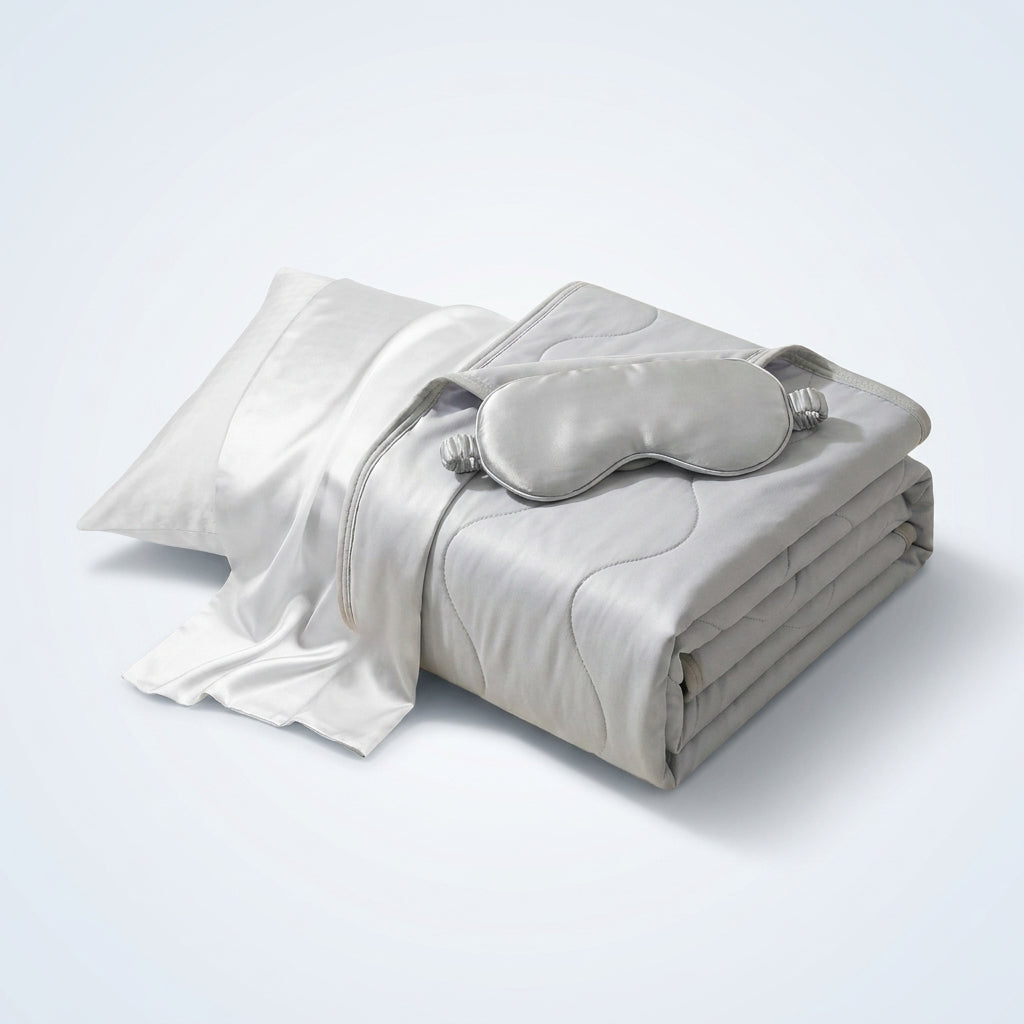
The top layer, because heavy bedding traps heat and heat feeds the itch. A lighter, smoother summer set such as Solstice keeps the surface next to your skin cooler and drier. The rest of our sleep comfort range is grouped by fabric if you want to compare.
And the thing nobody writes about: your detergent. Fragrance and optical brighteners stay in the fibers after washing and sit against your skin all night. If your skin has become reactive, switch to a fragrance-free detergent, skip fabric softener and dryer sheets entirely, and run an extra rinse. Give it three weeks before you judge the result, since it takes a few wash cycles to clear the residue already in your sheets.
A simple night routine for itchy skin
Nothing here is complicated. Consistency is what makes it work. Here is the same evening done two ways.
- Long hot shower, a gel that lathers heavily
- Towel rubbed briskly, moisturiser twenty minutes later or not at all
- Fragranced detergent, softener in the drawer, dryer sheets
- Warm bedroom, heavy duvet, cotton nightshirt that is damp by 2am
- Nothing by the bed, so a 3am wake-up ends in scratching
- Ten minutes, warm not hot, a non-foaming fragrance-free cleanser
- Patted dry, moisturiser on still-damp skin within three minutes
- Fragrance-free detergent, no softener, an extra rinse
- Room near 65F / 18C, lighter top layer, smooth pillowcase
- Moisturiser within reach, nails short, so 3am has an answer

If the itching arrives on the back of a sweat rather than on its own, treat the sweat as the first problem. What actually helps night sweats covers the room, the fabrics and the 3am routine, and night sweats and menopause explains why the two symptoms keep arriving together.
If you are doing all of this and still awake scratching, that is the point to see a doctor. Prescription options exist, and hormone therapy improves skin dryness for some women, but that is a conversation to have with someone who knows your history.
FAQ
Is itching a symptom of menopause?
It can be. Falling estrogen reduces collagen, oil and barrier lipids, which leaves skin drier and more easily irritated. It is not a definitive sign on its own, since many other conditions cause itching.
Does menopause itching go away?
For most women the intense phase eases as hormone levels stabilize in postmenopause. The underlying dryness tends to stay, so a moisturizing routine remains worthwhile afterwards.
Are itchy ears a symptom of menopause?
They can be. The ear canal is thin-skinned and depends on natural oils, so it dries out along with the rest of your skin. See a doctor if there is pain, discharge or any change in hearing.
Can menopause make you itch at night specifically?
Yes. Skin temperature and water loss both rise overnight, cortisol is at its lowest, and night sweats add salt and damp friction. Cooler bedding and a smoother pillowcase address the parts you can control.
Does a silk pillowcase help with itchy skin?
It reduces friction against the face and absorbs less of your night-time moisturizer, so it removes one irritant. It does not treat the cause, which is hormonal, and it works only alongside a proper moisturizing routine.
Sources
- American Academy of Dermatology, Dry skin: diagnosis and treatment
- American Academy of Dermatology, How to reduce premature skin ageing
- Cleveland Clinic, Menopause, perimenopause and postmenopause
- Cleveland Clinic, Hyperhidrosis
- American Academy of Dermatology, How to relieve uncontrollably itchy skin
- NIAMS (National Institutes of Health), Atopic dermatitis
- FTC Consumer Advice, 'Bamboo' fabrics
Researched and written by Claire Bennett. This article is for general information and isn't medical advice. Itching that keeps you awake most nights, or comes with a rash, deserves a proper look from your doctor.
Fewer things rubbing against you
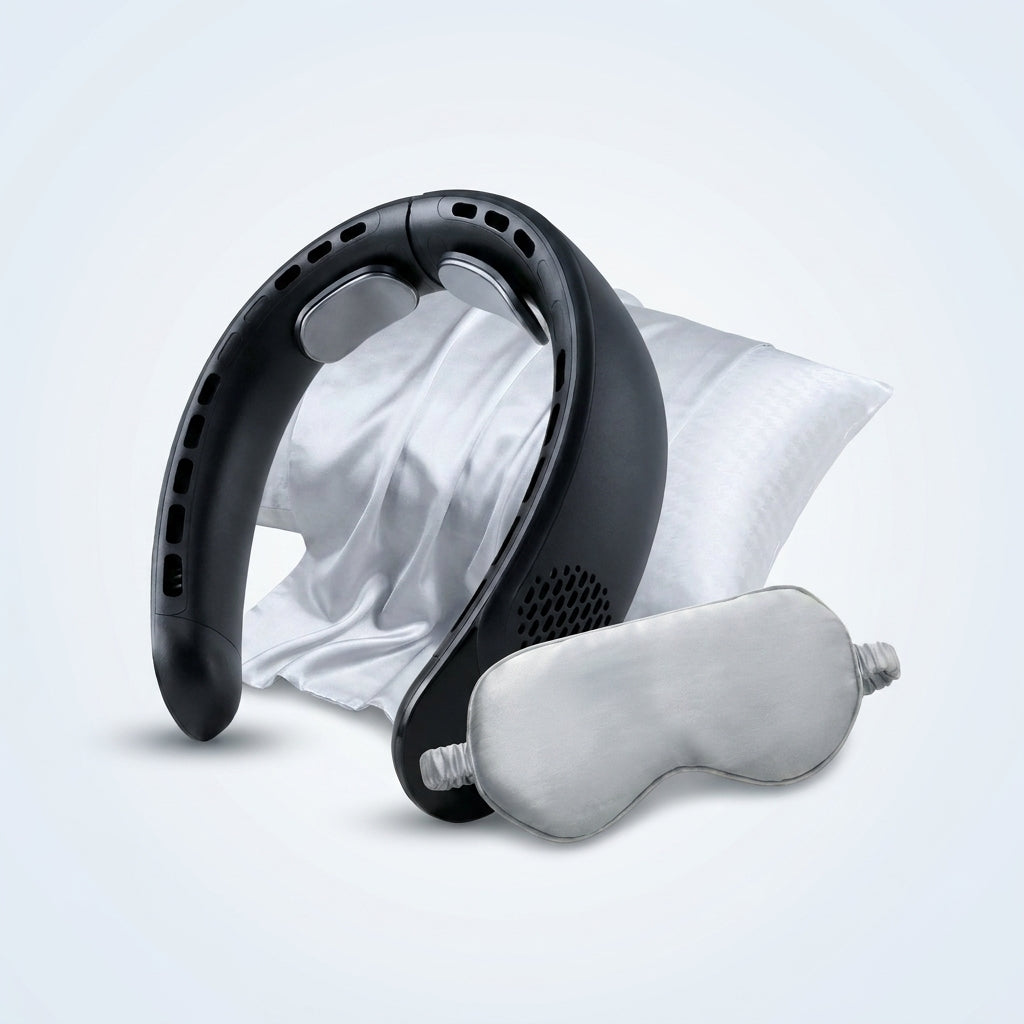
None of this treats the cause. It takes away the friction and the heat, which are the two parts of the night you can actually change. Bundle two or more pieces and the discount applies automatically.
Shop sleep & comfort


