

Menopause Insomnia: Why You Can't Fall Asleep (And How to Fix It)

- Up to 61% of women in perimenopause and menopause develop insomnia, even without night sweats.
- The main cause: declining progesterone, the calming hormone that helps you fall asleep, and disrupted estrogen, which controls your sleep cycles.
- Sleep hygiene (light exposure, temperature, schedule, wind-down ritual) is the first thing to fix, it costs nothing and works for most women.
- If hot flashes wake you up, cooling support (a wearable necklace or cooling pillow) often solves both the heat and the sleep problem.
- For severe cases, HRT or cognitive behavioral therapy for insomnia (CBT-I) are the two most evidence-backed treatments, both proven in randomized trials.
- What menopause insomnia really is
- Why hormones break sleep
- Three patterns of menopause insomnia
- Sleep hygiene basics that actually work
- Resetting your circadian rhythm
- The 90-minute wind-down ritual
- What actually works (and what doesn't)
- Cooling and overnight comfort
- CBT-I and other clinical options
- Common questions
You're tired. Bone-deep, brain-fog tired. And yet, the moment your head hits the pillow, your mind switches on. Or you fall asleep at 10 p.m. and snap awake at 2 a.m. for no reason. If this sounds familiar, you're experiencing menopause insomnia, and it's one of the most disruptive but least understood symptoms of perimenopause.
The good news: this isn't permanent, and it isn't all in your head. Once you know which hormone is doing what, you can put a real plan together. This guide explains the why and walks through what works.
What Menopause Insomnia Really Is
"Insomnia" doesn't just mean lying awake all night. Menopause insomnia comes in three patterns, and most women experience some mix of them:
- Sleep-onset insomnia, trouble falling asleep at the start of the night (you lie in bed for an hour or more)
- Sleep-maintenance insomnia, falling asleep fine but waking up in the middle of the night, often around 2-4 a.m.
- Early-morning waking, waking up earlier than you want and being unable to fall back asleep
According to The National Sleep Foundation, as many as 61% of perimenopausal and menopausal women report disrupted sleep, a higher rate than at any other time in their lives.
Why Your Hormones Break Sleep
There are three hormonal shifts during menopause that hit sleep directly. They overlap, which is why the experience can feel chaotic.
1. Progesterone drops
Progesterone is your body's natural sedative. It boosts GABA, the calming neurotransmitter that quiets your brain at bedtime. As progesterone declines in perimenopause, that calming signal weakens, and lying in bed feels like your brain won't switch off.
2. Estrogen fluctuates
Estrogen helps regulate serotonin (mood, sleep depth) and your core body temperature. When estrogen drops or swings unpredictably, you get:
- Lighter sleep, less time in deep restorative stages
- Hot flashes and night sweats that pull you out of sleep
- Mood shifts that feed bedtime anxiety
3. Cortisol rhythms shift
In a healthy sleep cycle, your stress hormone cortisol should be at its lowest around midnight and rise gradually toward morning. In menopause, this pattern often inverts, cortisol can spike at 2-4 a.m., which is exactly when many women report waking suddenly, heart racing, fully alert.

Three Patterns of Menopause Insomnia
Each pattern has a different root cause and therefore a different best fix.
| Pattern | What it feels like | Most likely cause | What helps first |
|---|---|---|---|
| Can't fall asleep | Lying awake 1-2 hours at bedtime | Low progesterone, racing mind | Wind-down ritual, paced breathing |
| Wake at 2-4 a.m. | Falling asleep fine, snap awake middle of night | Cortisol spike, hot flash, light exposure | Cooling support, blackout curtains |
| Early-morning waking | Waking 1-2 hours before alarm, unable to return | Estrogen and serotonin changes | Light therapy in the morning, HRT discussion |
Identifying your pattern matters because the same general advice (drink less coffee, no screens before bed) won't move the needle for everyone. A woman who can't fall asleep needs a different plan than one who wakes at 3 a.m.
Sleep Hygiene Basics That Actually Work
Sleep hygiene is the foundation. It's free, it works, and most women see real change within two weeks. Here are the few rules that have the strongest evidence:
Keep a consistent wake time
This matters more than bedtime. Your body builds its sleep pressure based on when you wake. If you wake at 7 a.m. on weekdays and 10 a.m. on weekends, you're giving yourself mild jet lag. Stick within an hour of the same wake time, even on weekends.
Cool, dark, quiet
Your bedroom should be:
- Cool, 60-67°F (15-19°C) is ideal for menopausal sleep
- Dark, blackout curtains or a sleep mask; even small light leaks reduce melatonin
- Quiet, earplugs or a white noise machine if your environment isn't naturally silent
No clock-watching
Turn the clock face away from the bed. Checking the time at 3 a.m. raises cortisol and reinforces the wake-up pattern. You don't need to know what time it is, you'll wake when you wake.
Resetting Your Circadian Rhythm
One of the most powerful (and underused) menopause sleep tools is natural light exposure in the first hour after waking. Light hitting your eyes early in the morning resets your circadian clock and tells your body to release melatonin about 14 hours later, naturally.

What to do
- Within 30 minutes of waking, get 10-15 minutes of natural light, sit by an open window, step onto a balcony, or take a brief outdoor walk
- No sunglasses during this exposure (sunglasses block the signal)
- If you live somewhere dark in winter, a 10,000-lux light therapy lamp (around $40) for 20 minutes after waking works almost as well
This single change improves sleep more than most supplements for the women who try it consistently. Give it two weeks.
The 90-Minute Wind-Down Ritual
If you can't fall asleep at night, your body and brain need a transition period. A wind-down ritual signals that the day is ending. It doesn't have to be elaborate, but it has to be consistent.

A simple 90-minute plan
| Time before bed | What to do |
|---|---|
| 90 min | Dim the lights. Stop work or stressful conversations. Last cup of caffeine-free herbal tea. |
| 60 min | Warm bath or shower (the temperature drop afterward helps trigger sleepiness). |
| 30 min | No screens. Read a paper book. Light a candle. Slow stretching. |
| 10 min | Paced breathing, 6 breaths per minute, eyes closed, in bed. |
Doing the same simple sequence every night builds a powerful conditioned response. Your brain learns: this is the signal that sleep is coming.
What Actually Works (And What Doesn't)
Cutting through the marketing, here's the honest evidence.
Strong evidence
- Sleep hygiene + consistent schedule, works for the majority of women within 2-4 weeks
- Morning light exposure, resets the circadian clock, naturally builds melatonin at night
- CBT-I (cognitive behavioral therapy for insomnia), as effective as sleeping pills, with no side effects, and effects last for years
- HRT (where appropriate), when sleep issues are driven by night sweats, hormone therapy fixes the root cause
- Cooling support, for sleep disrupted by hot flashes, a cooling necklace or cooling pillow is often the single most useful upgrade
Moderate evidence
- Magnesium glycinate, gentle calming effect; safe to try at 200-400 mg before bed
- Paced breathing, reduces cortisol, lowers heart rate, helps fall asleep
- Yoga and gentle stretching, particularly in the evening
Weak or no evidence
- Melatonin (regular dose), works best for jet lag and shift work, not for menopause insomnia
- Alcohol as a sleep aid, falls asleep faster, but wakes you at 3 a.m. every time
- Most "sleep blend" supplements, marketing, not science
- CBD for sleep, limited and inconsistent evidence
Cooling and Overnight Comfort
If hot flashes or just feeling too hot is what wakes you, no amount of sleep hygiene will fix the root cause. Cooling support handles both problems at once: it cools you when a hot flash starts, and prevents the wake-ups that turn into hours of staring at the ceiling.
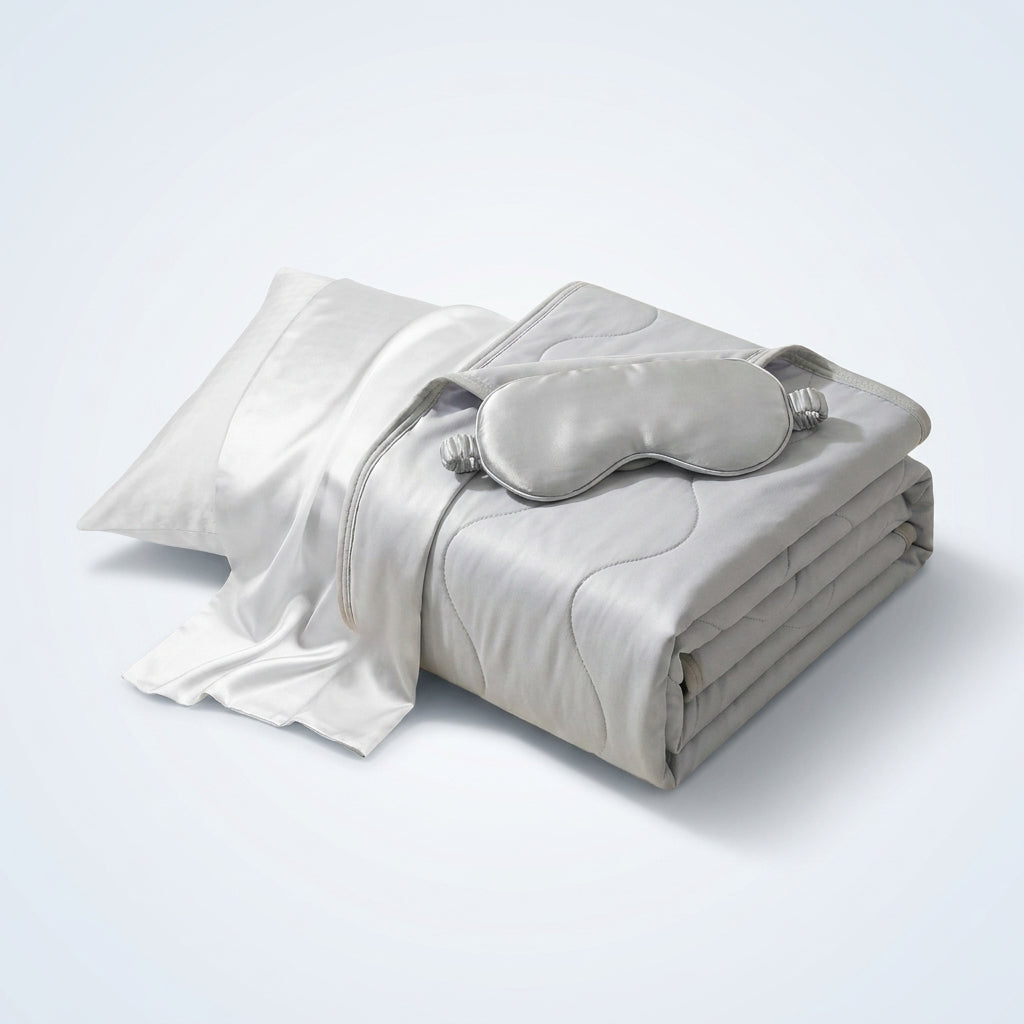
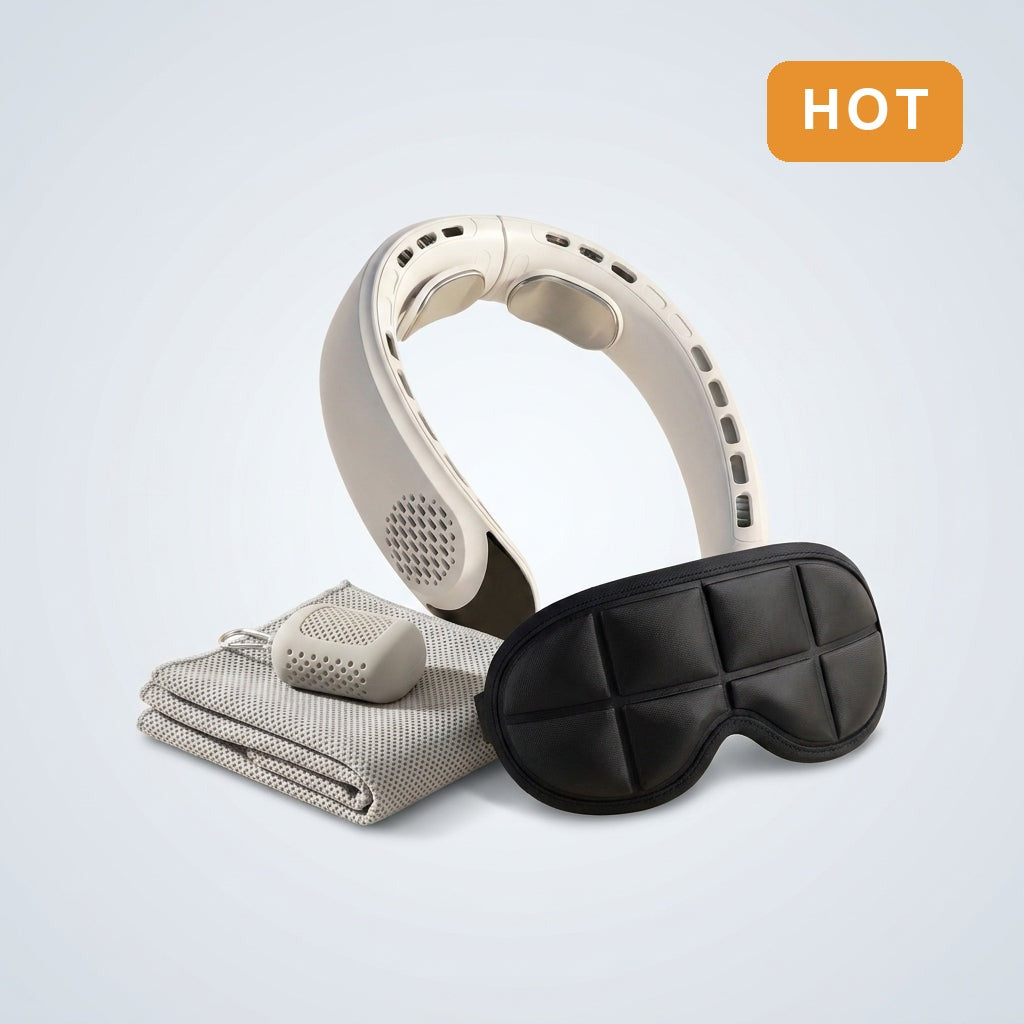
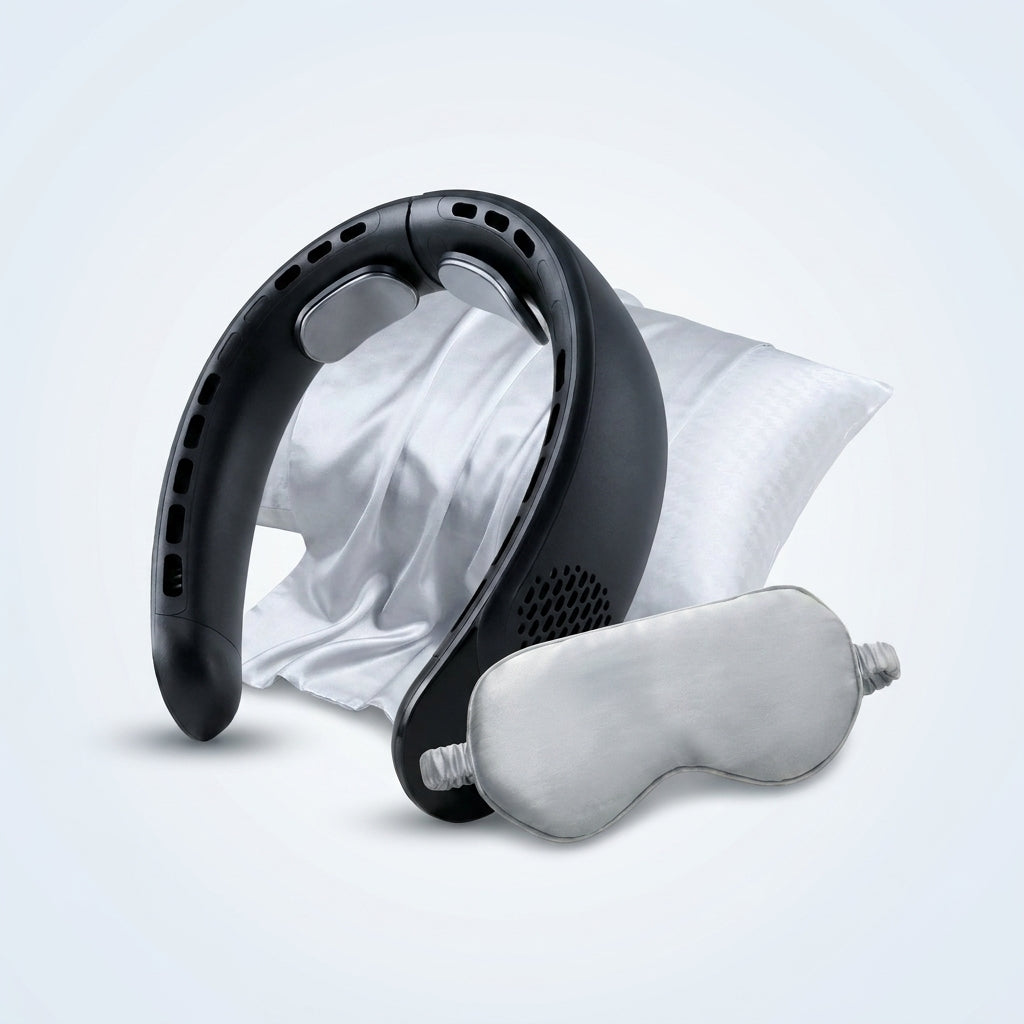
The most effective option for nighttime use is a wearable cooling necklace. Modern designs are whisper-quiet and light enough that you forget you're wearing it. Combine it with cooling sheets and a gel pillow, and you've covered the three big triggers: bedding heat, body heat, and acute hot flashes.

Whisper-quiet cooling, made for the moments you want to sleep
Plume is the lightest in the Seranzio collection, designed for overnight wear. Quiet airflow that won't wake your partner, a 6-hour battery that covers the toughest stretches of disrupted sleep, and a soft profile that disappears once you're under the covers.
CBT-I and Other Clinical Options
If sleep hygiene and cooling don't move things in 4-6 weeks, escalate. There are two options with the strongest clinical evidence.
CBT-I, Cognitive Behavioral Therapy for Insomnia
CBT-I is the gold-standard treatment for chronic insomnia. The American College of Physicians recommends it as first-line treatment, ahead of medications. Multiple studies show it works as well as sleeping pills, with no side effects, and the benefits last for years.
CBT-I usually involves 4-8 sessions and includes:
- Sleep restriction therapy, temporarily reducing time in bed to consolidate sleep
- Stimulus control, retraining your brain to associate bed with sleep
- Cognitive restructuring, replacing anxious bedtime thoughts
Apps like Sleepio, CBT-I Coach (free, from the U.S. Department of Veterans Affairs), and Somnology deliver effective CBT-I from your phone. Many menopause clinics also offer it directly.
HRT (Hormone Replacement Therapy)
If the root cause is hormonal, and especially if hot flashes are waking you, HRT addresses the problem at its source. Most women see significant sleep improvement within the first 4-6 weeks of starting therapy. Talk to a menopause-specialist clinician (telehealth options like Alloy, Midi Health, and Evernow in the US, or Newson Health and Menopause Care in the UK make access easier).
Sleep medications, short-term only
Prescription sleeping pills (zolpidem, eszopiclone, etc.) work but are best for short-term use only, they don't fix the underlying issue and many women develop tolerance. Use them as a bridge while you build longer-term solutions.

Your 4-week sleep plan
- Week 1, Set a consistent wake time. Get 10 minutes of morning light. Cool your bedroom to 65°F (18°C).
- Week 2, Add the 90-minute wind-down ritual. Cut caffeine after 2 p.m. and alcohol after 7 p.m.
- Week 3, If hot flashes are waking you, add cooling support (necklace, cooling pillow, or both).
- Week 4, Assess. If you're sleeping better, lock in what works. If not, talk to your doctor about CBT-I or HRT.
Common Questions
Why do I always wake up at 3 a.m.?
The most common reason in perimenopause is a cortisol spike at that hour, often combined with a hot flash you may not fully notice. Cooling your bedroom and your body and getting morning light exposure usually shifts this pattern within two weeks.
Does melatonin help with menopause insomnia?
Less than most people think. Melatonin is effective for jet lag and shift work, but the evidence for menopause insomnia is weak. Magnesium glycinate (200-400 mg before bed) has slightly better evidence and a gentle calming effect.
Can I drink a glass of wine to help me fall asleep?
It will help you fall asleep faster, but it will wake you at 2 to 4 a.m. almost every time. Alcohol fragments the second half of the night badly. If you're using a nightcap, you're trading falling asleep for staying asleep.
How long until I see results from sleep hygiene changes?
Most women notice meaningful improvement within 2 to 4 weeks of consistent practice. The wake-time consistency, morning light, and bedroom temperature changes move the fastest.
Is HRT safe for sleep?
For healthy women within 10 years of menopause, the benefits of HRT typically outweigh the risks, and that includes its impact on sleep. The decision is personal and should be made with a clinician who knows your history.
Can a cooling necklace really help me sleep?
For women whose sleep is disrupted by hot flashes or just feeling too hot, yes. The neck has carotid arteries close to the skin, cooling that area lowers perceived body temperature within seconds. A whisper-quiet design like Plume is light enough to wear overnight without disturbing sleep.
Sources
- The Menopause Society, Hormone Therapy Position Statement (2022)
- National Sleep Foundation, Menopause and Sleep
- Cleveland Clinic, Insomnia
- Cleveland Clinic, Insomnia
- Qaseem A et al. Management of Chronic Insomnia Disorder in Adults: a clinical practice guideline from the American College of Physicians. Annals of Internal Medicine, 2016
- Baker FC et al. (2018). Sleep and menopause: a critical review. Journal of Clinical Sleep Medicine.
- Kalmbach DA et al. (2020). The impact of sleep and circadian disturbance on hormones. Sleep Medicine Reviews.
Cool. Calm. Composed.
Quiet, lightweight cooling necklaces, for the moments hot flashes find you. At work. At dinner. At 2 a.m.
Shop the Collection


)