
How to Stay Cool Without AC While You Sleep

- Order matters. Cool the room in daylight, cool the bed, aim the air at your body, then cool yourself.
- A fan does not cool air. It only helps if it is pointed at you, because it works by evaporating sweat.
- Your mattress stores heat all night and hands it back. Nothing you do to the air reaches it.
- The frozen pillowcase is real but brief. Good for falling asleep, useless by 2am.
- If you wake up soaked in an already cool room, the room was never the problem.
- How to stay cool without AC: the short version
- Step 1: cool the room first
- Step 2: cool the bed, layer by layer
- Step 3: aim airflow at you, not the room
- Step 4: cool your body before bed
- The hot-weather protocol
- How to cool down in bed fast
- What works and what to skip
- If it is hot flashes rather than the weather
- FAQ
How to stay cool without AC comes down to four things, done in order: cool the room during the day so it never gets hot, cool the surfaces your body touches, point moving air at your skin rather than at the room, and drop your own temperature before you get into bed. Most guides stop at "open a window". The parts that change how the night actually feels are the bed itself and the airflow across your skin.
Worth saying up front: many people searching how to stay cool at night are women in perimenopause or menopause, and they are not fighting the weather. They are fighting an internal thermostat that misfires at 3am. Everything below still helps, but it helps differently, and we have flagged where.
How to stay cool without AC: the short version
| Method | What it costs | How long it lasts | Who it suits |
|---|---|---|---|
| Blackout curtains closed all day | One purchase | All season | Sun on the bedroom window |
| Cross breeze at night | Free | While outside air is cooler | Homes that cool after dark |
| Box fan blowing out of the window | Fan you own | All night | Upstairs rooms holding heat |
| Fan aimed at your body | Fan you own | All night | Almost everyone |
| Warm shower an hour before bed | Free | 30 to 60 minutes | Trouble falling asleep |
| Damp cooling towel on the neck | One purchase | 15 to 30 minutes | Waking up damp |
| Frozen pillowcase | Free | Minutes, honestly | Falling asleep only |
| Cooling mat on the mattress | One purchase | All night | Mattresses that store heat |
| Ice-silk or bamboo top layer | One purchase | All night | Sweaty and side sleepers |
| Wearable neck fan or cooling plate | One purchase | Battery life | Flashes while you are awake |
Step 1: cool the room first
You cannot cool a room you have already let get hot, so most of the work happens in daylight. The biggest lever is sun through glass. Close blinds and curtains on any window the sun hits, before it reaches them rather than after. Lined or blackout curtains do far more than sheer ones. That is the core of how to keep room cool without AC in a house that bakes all afternoon.

Open the windows at the wrong hour and you import heat. Keep them shut while it is hotter outside than inside. Check a thermometer, and open up once the outdoor temperature drops below the indoor one, usually an hour or two after sunset.
For cross ventilation, open two windows on opposite sides of the home. With only one, put a box fan in it facing outward on the hot side of the house: it pushes warm air out and pulls cooler air through the other rooms. That is the most reliable answer to how to make room colder at night without buying anything. Many sleep specialists suggest a bedroom around 60 to 67°F (16 to 19°C).
Step 2: cool the bed, layer by layer
This is where the real difference lives, and it is the step most articles skip.
Your mattress is a heat store. Foam absorbs body heat all night and hands it back, and nothing you do to the air fixes that, because the heat is trapped underneath you where no breeze reaches. A pad on top addresses it directly: it sits under the sheet and pulls heat away on contact instead of storing it.

Frost Fitted, ice-bead mattress pad
Goes under the sheet, not over it. Deep elastic corners so it does not rumple up in the night. It works on the one surface a fan can never reach, which is the one you are lying on.
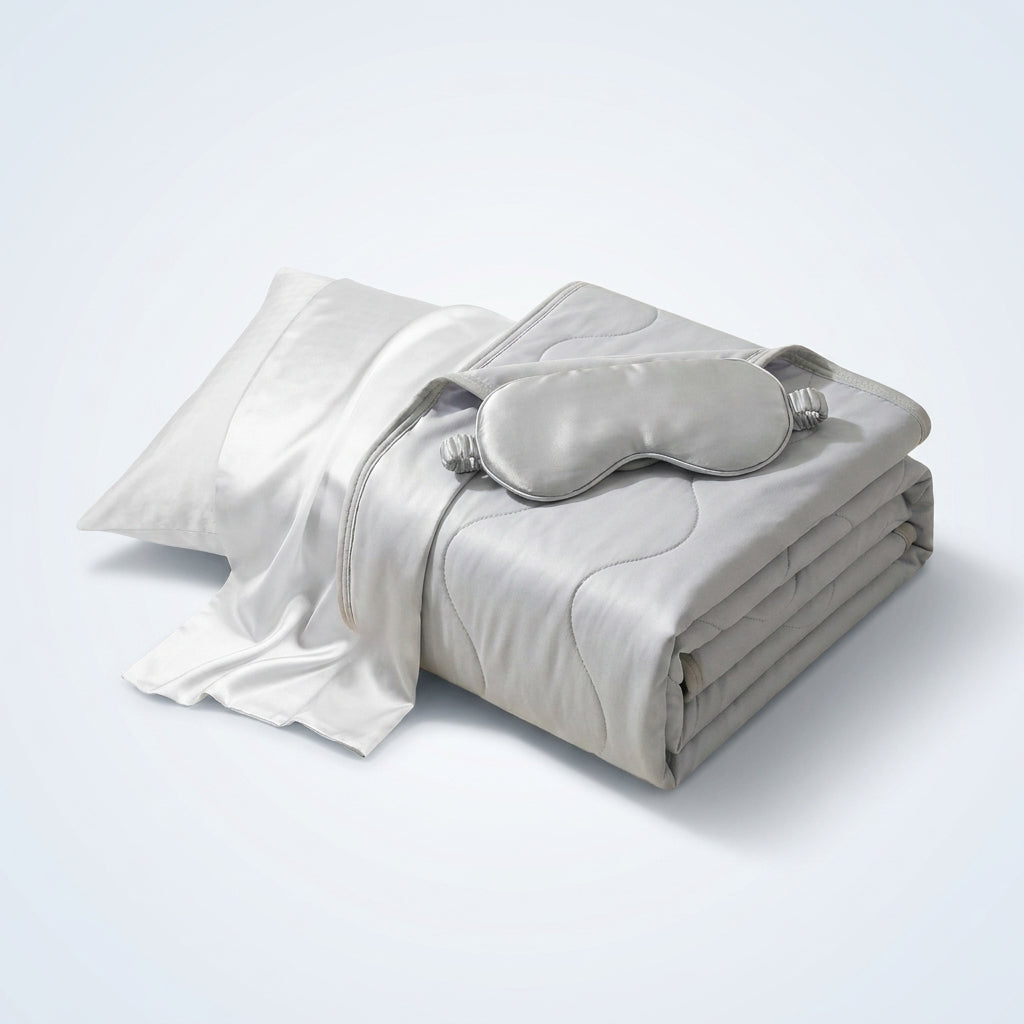
Above you, fiber matters more than thickness. Ice-silk and bamboo both move heat off the skin faster than cotton. The Zephyr double-sided ice-silk blanket has a cool side and a warmer side, useful if you swing between sweating and shivering in one night. The Onda bamboo waffle blanket breathes rather than cools on contact, and a full Solstice ice-silk set replaces the top layer in one go, with a fitted sheet in the four-piece version. If you are choosing between fabrics rather than products, we compared them properly in the best sheets for night sweats and the best cooling blankets.
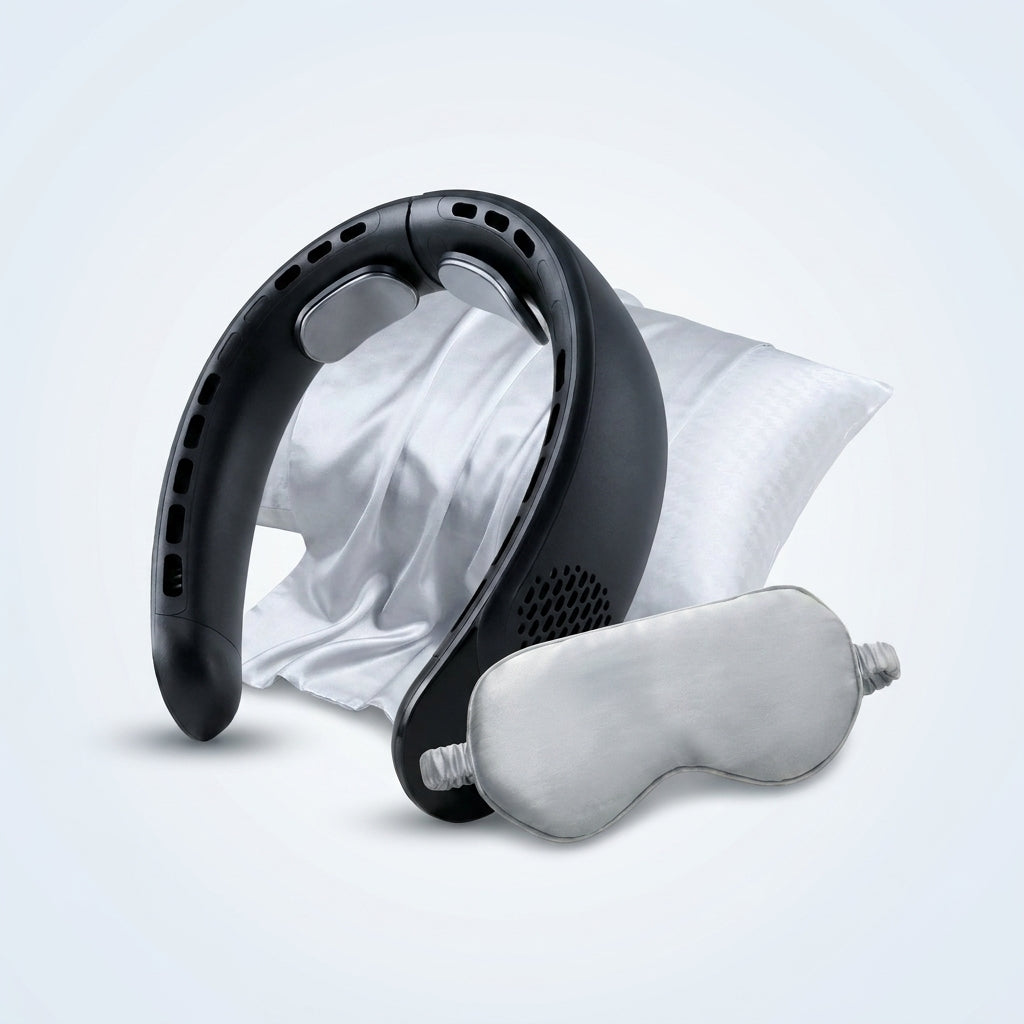
Then the pillow, which traps more heat than people expect. A shredded-fill design like the Cumulus lets air move through instead of trapping it, the Crest trades some of that for proper neck support, and a silk or satin case gives you a surface that does not hold damp against your face (we compared those fabrics in our guide to silk vs satin pillowcases).
One practical detail nobody mentions: own two sets of bedding in summer. Remaking a bed at 3am without doing laundry first beats any single product.
Step 3: aim airflow at you, not the room
A fan does not cool air. It moves air across your skin so sweat evaporates, and evaporation carries the heat away. That is why a fan in an empty room is pointless while a fan pointed at your chest feels like relief.
So point it at yourself, low and angled up towards the bed rather than high and blowing down. Run a ceiling fan counterclockwise in summer so it pushes air downward.
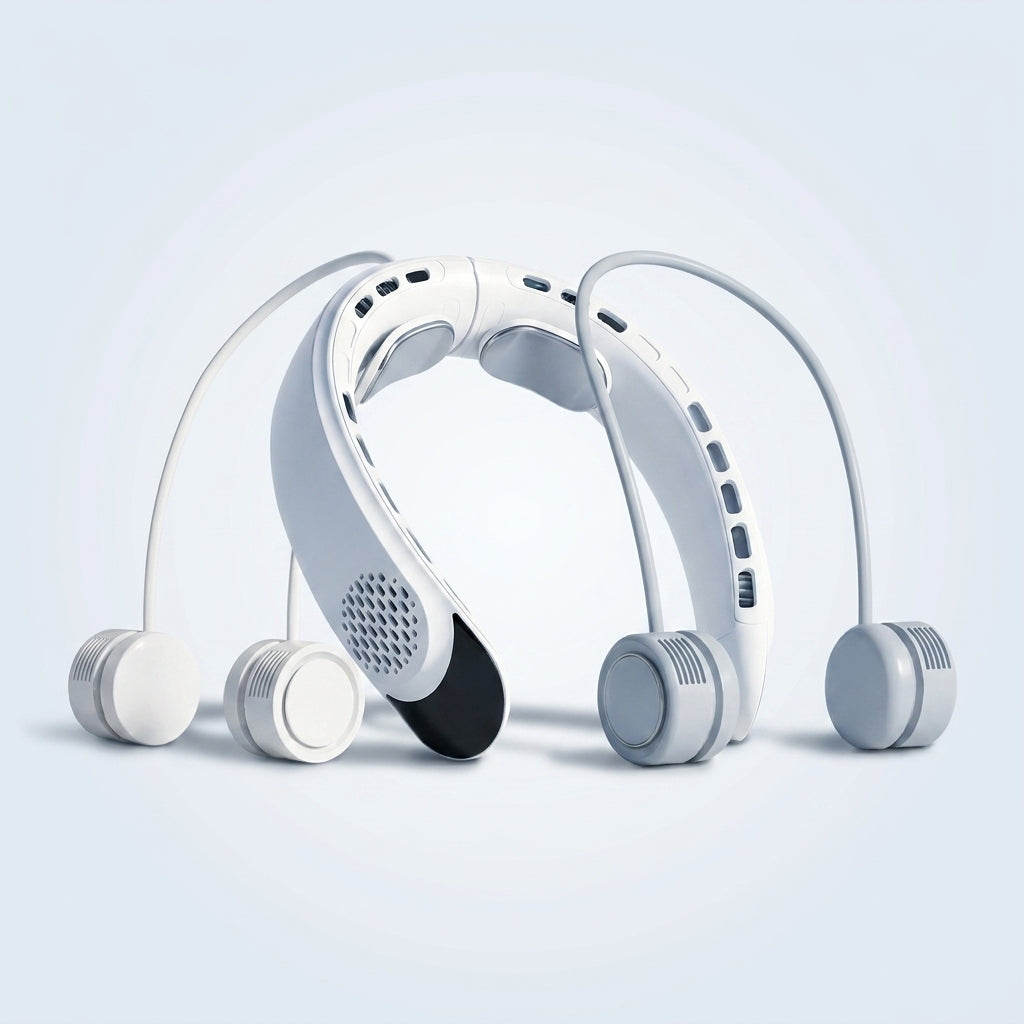
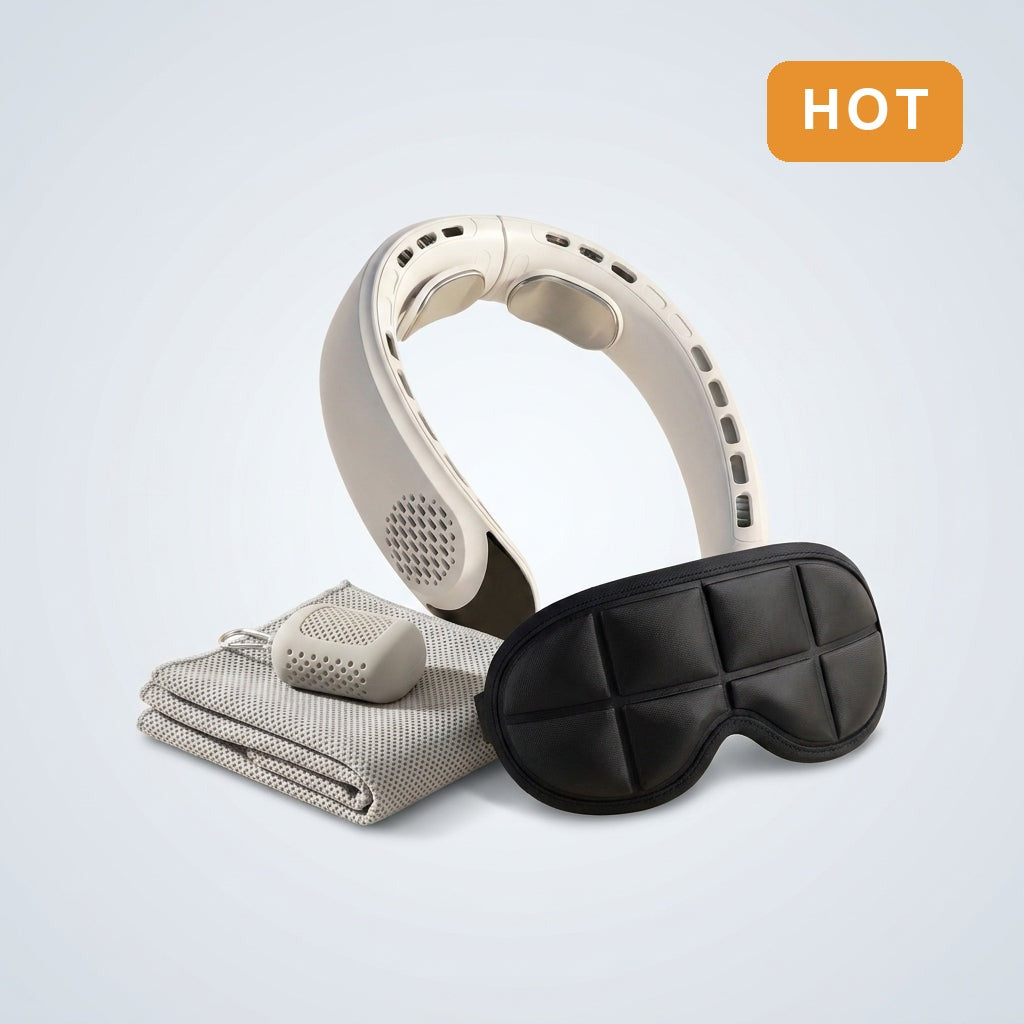
If you have wondered why can't I sleep without a fan, part of it is temperature and part is steady noise covering the rest of the house. The Plume neck fan is the one people use in bed, and it runs under 36 dB, which is quieter than a library. The limit worth naming: a wearable fan cools the air around your neck and face, not the room, and no battery lasts eight hours on high. Treat it as help for the first hour and the 3am wake-up. The full neck fan range covers daytime versions, and we put all four side by side, including where they stop being useful, in the best neck fans.
Step 4: cool your body before bed
Your core temperature has to fall by about a degree for sleep to start, so help it along. A warm (not hot) shower an hour before bed sounds backwards but works: it brings blood to the surface of your skin, and once you step out you shed heat faster than you otherwise would.
Target the places where heat leaves fastest. Palms, soles and the face have dense blood vessels close to the surface. Run cool water over your wrists for a minute, or leave your feet outside the covers. A damp Brume cooling towel on the back of the neck is the same idea and lasts longer than a wet flannel. A cooling eye mask such as Rime can go in the fridge (not the freezer) and buys ten minutes of relief on a flushed face.
The hot-weather protocol
For nights that will not drop below 80°F
- Curtains closed from morning. No cooking after 5pm.
- Windows open the moment outside is cooler than inside, box fan facing out of the hottest one.
- Warm shower, damp towel on the neck, hair up.
- Ice-silk or bamboo top layer only. Skip the duvet.
- Fan aimed at the bed on its lowest useful setting.
- Water and a spare pillowcase within reach.
- Sleep on the lowest floor if you can.
For how to sleep in a hot room with one window and no airflow, prioritize the bed surface and a directed fan. Those two work in still air. Ventilation tricks do not.
How to cool down in bed fast
You are awake, damp, and it is 3:20am. In order of speed:
- Uncover one leg and both feet. Fastest move there is, and free.
- Flip the pillow, turn the blanket to its cool side.
- Cold water on wrists and the back of the neck, about 30 seconds.
- Damp towel on the neck, fan on.
- Change the pillowcase or sheet if it is wet. Damp fabric keeps you awake even after you have cooled down.
The underrated part of how to cool down in bed is not getting hot in the first place. If you wake at the same time every night, cool the room harder before bed instead of firefighting at 3am. That is most of how to sleep cooler.
What works and what to skip
- Freezing the pillowcase. A thin piece of fabric holds almost no cold. Lovely for falling asleep, gone by the time it matters
- A bowl of ice in front of a fan. Maybe twenty minutes in dry air, and it backfires in humidity
- Sleeping with nothing on. Sweat needs somewhere to go
- Gel foam toppers. Gel foam is still foam. It delays the heat rather than preventing it
- Curtains shut in daylight, before the sun reaches the glass
- A pad on the mattress, because that surface is the one no breeze reaches
- The fan pointed at your body, low and angled up
- A thin layer that moves moisture, and a spare within arm's reach
On the frozen pillowcase, one honesty note: we have not timed it with a thermometer, and we are not going to invent a figure. What we can say is that nobody recommending the trick mentions it is a matter of minutes rather than hours.
If it is hot flashes rather than the weather
If you wake up soaked in a room that is already cool, the room was never the problem. Vasomotor symptoms in perimenopause and menopause make the body dump heat suddenly, often followed by a chill as the sweat evaporates. That pattern needs a different setup: a two-sided blanket you can flip instead of getting up, a surface that does not stay damp, spare bedding within arm's reach, and something cold to hold against your skin immediately.
For that last part a cooling plate does more than moving air. The Mistral neck fan carries two semiconductor plates that sit against the sides of your neck and drop by around 15°C in about three seconds. Read that as a drop of fifteen degrees from where they started, not a plate chilled to 15°C. Honest limit: it cools the skin it touches, not the room, and it runs on a battery.
None of this touches the hormonal cause. If the sweats are frequent or new, raise it with your doctor. We wrote more about what happens during a hot flash and about why sleep breaks down in menopause.
Building the whole setup at once? The sleep comfort collection covers the bedding side, and the discount stacks automatically: two items take 10% off, three take 15%, four or more take 20%. Details on the bundles page. For daytime heat, a pocket fan like Bora charges over USB-C.
FAQ
How do you sleep without air conditioning in a heatwave?
Block the sun during the day, ventilate only once outside is cooler than inside, sleep under one breathable layer, and aim a fan at your body.
How do you stay cool while sleeping without a fan?
Cool the room before bed, use a contact-cooling mattress pad and an ice-silk or bamboo top layer, and cool your wrists and feet before lying down.
Does a frozen pillowcase actually work?
Briefly. It helps you fall asleep and does nothing for the rest of the night, because a thin piece of fabric stores very little cold.
How do I stay cool when sleeping if my partner is cold?
Split the top layers. Two separate blankets on one bed settles more arguments than any thermostat setting.
Sources
- Ready.gov (US Department of Homeland Security), Extreme heat
- National Heart, Lung, and Blood Institute, Sleep deprivation and deficiency
- Cleveland Clinic, Sleep basics
- Cleveland Clinic, Menopause, perimenopause and postmenopause
- American Academy of Dermatology, Hyperhidrosis: diagnosis and treatment
- FTC Consumer Advice, 'Bamboo' fabrics
Researched and written by Claire Bennett. In extreme heat, older adults and people with heart or lung conditions are at real risk. Follow local public health guidance rather than a bedding article.
Start with the layer a fan cannot reach
The mattress is the surface storing your heat, and the one every guide skips. Bundle two or more pieces and the discount applies automatically.
Shop sleep & comfort


