
The Best Cooling Blanket for Menopause and Hot Sleepers: All Five Compared

- Buy double-sided. A flash is a spike followed by a chill, so you want a cold face and a softer one to turn to.
- Ice-silk moves heat fastest on contact. Bamboo breathes best across a whole night.
- Loft is the enemy. Trapped air is what makes a blanket warm, so flat and dense beats fluffy.
- Buy one size larger than usual. More fabric means more unwarmed surface to roll onto.
- Cooling weighted blankets pull against themselves. Weight squeezes out the gaps that let heat escape.
- What happens during a hot flash, and why a blanket can only do half the job
- How to judge a cooling blanket
- The five Seranzio cooling blankets compared
- Best overall: double-sided ice-silk
- Best bamboo cooling blanket
- Best lightweight cooling throw for summer
- Best quilted picks for year-round use
- Best cooling blanket for menopause: perimenopause, menopause and after
- What sizes do cooling blankets come in?
- What about cooling weighted blankets?
- Quick picks: the best blanket for night sweats
- FAQ
The best cooling blanket for menopause is a double-sided one, and the reason has nothing to do with marketing. A hot flash is not a slow warming, it is a spike followed by a chill, so the blanket that helps most is the one with a cold-touch face for the surge and a softer side to turn to twenty minutes later. Fabric comes second: smooth ice-silk moves heat fastest, bamboo is the most breathable over a whole night.
Search results here are unusually thin. The best-known lab comparison sits behind a paywall with two-year-old data, one top-ranked page lists zero products tested, and almost none mention menopause. So here is the version written for the person actually searching.
What happens during a hot flash, and why a blanket can only do half the job
A flash does not begin with your body genuinely overheating. It begins in the hypothalamus, which during the menopause transition tolerates a much narrower band of comfortable temperature. Cross the edge of that band by a fraction of a degree and your body reacts as though you were dangerously hot. Blood vessels near the skin open, blood rushes to the surface, and skin temperature on your chest, neck and face climbs within a couple of minutes. Sweating follows. Most flashes run one to five minutes.
Two consequences matter for bedding.
First, a passive fabric carries heat away at a rate set by the temperature difference between you and it, and that rate does not surge when you do. So no blanket, at any price, prevents or shortens a flash. What a good one changes is what happens next: heat leaves instead of pooling under the covers.
Second, the chill afterwards is part of the same event. You have dumped heat and sweat, evaporation continues, and within twenty minutes you can be genuinely cold. This is where most women wake fully, get up, hunt for another blanket and lose an hour. Two usable sides solve that with a wrist movement, in the dark. Our article on what is really happening during a hot flash covers the full mechanism.
How to judge a cooling blanket
What is the best cooling blanket depends on your room, your bed and your body, but four things decide it.
Fiber and weave. Ice-silk is a fine, smooth continuous filament that conducts heat well and feels genuinely cold on first touch. Bamboo viscose is less dramatic on contact but breathes and handles moisture better across a night. Quilted builds sit between the two and survive washing best.
Weight and loft. Loft is the enemy. Trapped air is what makes fleece feel warm, so a cooling blanket should be flat and dense rather than fluffy. Bulkier is always warmer.

Coverage. A bigger blanket holds more fabric you have not yet warmed, and rolling onto a fresh section is what brings the cold feeling back. Undersized blankets underperform for the same material.
Care. A hot dryer flattens fibers and damages cooling finishes. A blanket that cannot take frequent washing is wrong for night sweats, and more cooling blankets are ruined in the laundry than worn out in use. We set out the settings by fabric in how to wash a cooling blanket.
One thing we will not claim: we have not run lab tests on these, and we do not publish invented temperature readings. What follows is construction and fit.
The five Seranzio cooling blankets compared
| Blanket | Fabric | Feel | Best for |
|---|---|---|---|
| Zephyr | Double-sided ice-silk | Cold and slick on one face, softer on the reverse | Hot flashes and the chill that follows. Our first pick for menopause. |
| Onda | Bamboo waffle | Textured, airy, dry rather than icy | All-night breathability and heavy sweating |
| Cirrus | Quilted | Substantial, drapes with a little weight | Year-round use as your main blanket |
| Linea | Woven-stripe ice-silk | Smooth with visible texture, crisp | Cold touch with a less slippery hand |
| Drift | Lightweight summer throw | Barely-there, minimal coverage | Sofa, travel, and the hottest weeks of the year |
Best overall: double-sided ice-silk
An ice cooling blanket earns its name in the first seconds of contact, and Zephyr is built around that. Ice-silk filaments are smooth and continuous, so they contact a lot of skin at once and conduct heat away quickly. The reverse face is a softer knit for the post-flash cold.
Honest limits: the cold-touch sensation on any patch lasts a few minutes before your skin warms the fabric to its own temperature. That is true of every cool-touch fabric ever made, and anyone claiming otherwise is selling. The slick surface also shows creases and is not for anyone wanting a cozy texture.

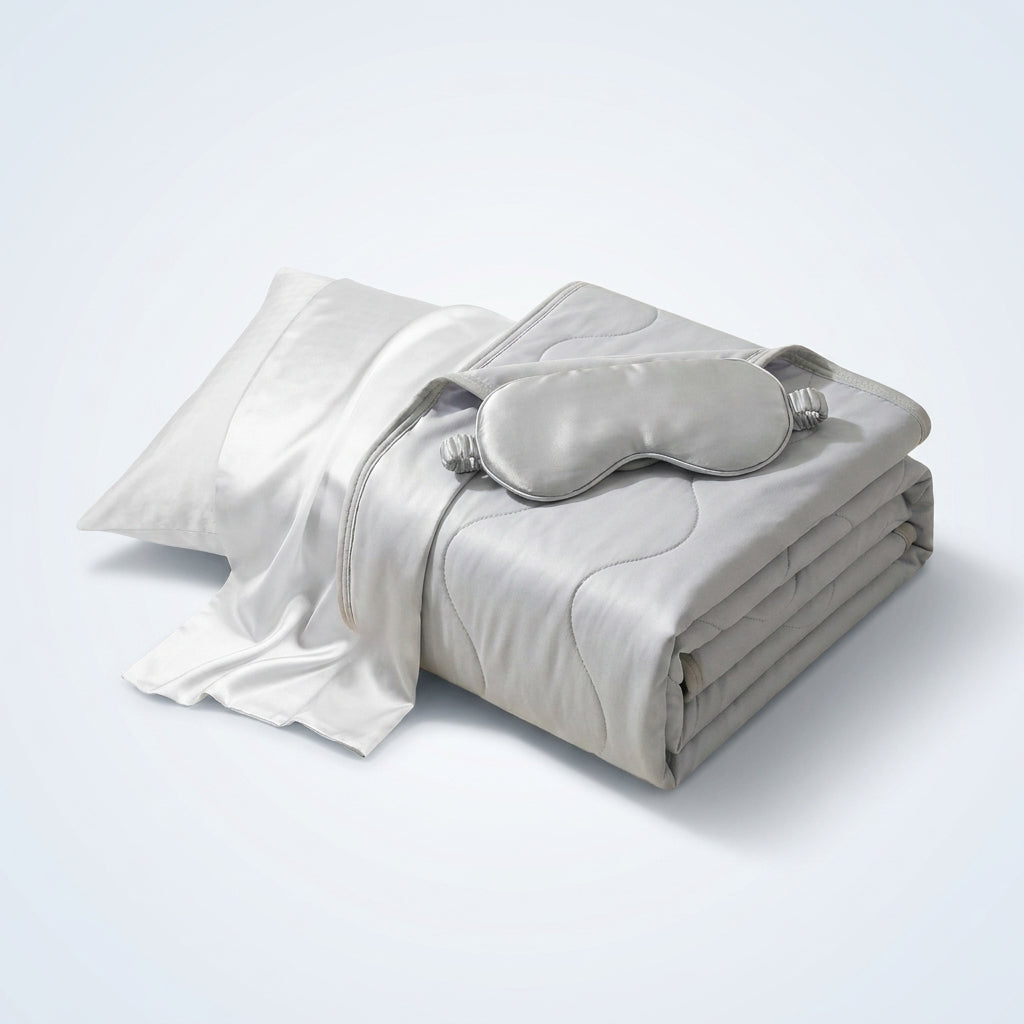
Zephyr, double-sided ice-silk
One face for the spike, the other for the chill that follows it. The point is not the fabric, it is that the answer to the second half of a flash is turning your wrist instead of getting out of bed in the dark.
Best bamboo cooling blanket
Bamboo cooling blankets work differently. Instead of a sharp cold hit, Onda uses a waffle weave that keeps air channels open and moves moisture. Over a full night that matters more than initial coolness, because once you are damp, cooling stops working regardless of the fiber. Choose a bamboo cooling blanket over ice-silk if you sweat heavily rather than simply running warm, if slick fabrics feel unpleasant, or if your bedroom is humid.
Honest limits: bamboo never feels as cold on first contact, waffle textures wrinkle, and it takes longer to dry.
Best lightweight cooling throw for summer
A cooling throw blanket is for nights when a full blanket is too much and no blanket feels wrong. Drift is our lightweight cooling blanket for that gap: enough to cover your shoulders, not enough to build heat. It is also the one for the sofa during daytime flashes, or folded into a suitcase, since hotel bedding is reliably too warm.
Honest limits: a cooling summer blanket is a summer blanket. Below about 68°F in the room, most people want something more substantial.
Best quilted picks for year-round use
If this will be the blanket on your bed all year, quilted construction holds up best. Cirrus has enough substance to feel like a real blanket while staying flat rather than lofty, and it keeps its shape through repeated washing better than thin single-layer throws. Linea takes the ice-silk approach with a woven stripe, so you get the cool touch with more texture and less slip.
Between the two: Cirrus for weight and durability, Linea if cold contact is the priority but you dislike a slick surface.
Best cooling blanket for menopause: perimenopause, menopause and after
A menopause cooling blanket is not a separate category of product. It is an ordinary cooling blanket chosen for a specific pattern of heat, and that pattern changes as you move through the transition. Nobody in the search results separates these stages, and they are not the same problem.
Perimenopause. Flashes are erratic. You may run hot for a week then be cold for a fortnight, and night sweats often arrive before anyone has told you what they are. Versatility beats maximum cooling, which argues for a two-sided blanket.
Menopause and the first years after. For most women this is the peak: flashes are most frequent around the final period and the year or two after. Prioritize the most heat-shedding fabric you can tolerate, buy larger than your mattress, and own two so one can be in the wash. A cooling blanket for hot flashes is only useful if it is on the bed.
Later postmenopause. Large long-term studies put the median duration of vasomotor symptoms at around seven years, with a substantial minority reporting them for a decade or more. Skin also gets drier and more friction-sensitive, so smooth fabrics become more comfortable for reasons unrelated to temperature.
The same caveat applies at every stage: bedding manages the aftermath of a flash, not the hormonal signaling that causes one. If symptoms are wrecking your sleep, talk to your doctor. Bedding is the part you can fix tonight. For the symptom itself, how long it typically lasts and why the tiredness hits so hard, see night sweats and menopause.
What sizes do cooling blankets come in?
Throw, twin, full or queen, and king, the same as ordinary blankets. Cooling blanket queen size is the most common choice, for a genuine reason: with cooling fabric, extra size is extra function, since it gives you more unwarmed material to roll onto. Sharing a bed with a warm sleeper, size up. Exact measurements are on each product page.
What about cooling weighted blankets?
We do not make one, so we have nothing to sell you here. But it is the question people ask most, so here is a straight answer.
Weight and cooling pull against each other. A weighted blanket presses evenly on you, and that pressure squeezes out the air gaps that let heat escape. Any weighted blanket runs warmer than an unweighted one in the same fabric. That is not a flaw, it is the trade-off built into the concept.
If you still want one, the criteria are: roughly 8 to 12 percent of your body weight, glass beads rather than plastic pellets since they are denser and add less bulk, a removable cooling cover because the cover is the only part touching you, and machine washable at home.
The honest caution for our readers: if hot flashes wake you, being pinned under fifteen pounds at 3am is the opposite of what you want. Weighted blankets suit bedtime anxiety. They suit heat surges poorly.
Quick picks: the best blanket for night sweats
Pick by the way your nights actually go
- Waking up drenched. Onda, for moisture handling.
- Waking up hot, then freezing. Zephyr, for the second side.
- One blanket for the whole year. Cirrus.
- Hottest weeks of summer, or travel. Drift.
- Cool without feeling slippery. Linea.
Not sure a cooling blanket is the right purchase at all? Read how cooling blankets actually work first. If the mattress and sheets are the real problem, and they often are, start with the best sheets and bedding for night sweats. The rest of the bed is in sleep comfort, where two or more items apply an automatic bundle discount.
FAQ
What is the best cooling blanket for menopause?
A double-sided one. Flashes end in a chill, so a blanket with a cold-touch face and a warmer reverse lets you handle both without getting out of bed. Ice-silk cools fastest on contact, bamboo breathes best across the night.
Do cooling blankets help with hot flashes?
They shorten the recovery rather than prevent the event. A flash begins with hormonal signaling, which no fabric affects.
Bamboo or ice-silk, which is better?
Ice-silk for the coldest first contact, bamboo for heavy sweating and humid rooms. If you wake up damp rather than simply warm, choose bamboo.
What size cooling blanket should I buy?
One size larger than you would normally pick. More fabric means more cool surface to move onto, which is how these blankets deliver their effect through the night.
Are cooling weighted blankets worth it for night sweats?
Usually not. Weight compresses the air gaps that let heat escape, so they run warmer. Better for bedtime anxiety than for heat.
Sources
- Cleveland Clinic, Menopause, perimenopause and postmenopause
- ACOG, The menopause years
- FTC Consumer Advice, 'Bamboo' fabrics
- FTC, Labeling requirements under the Textile and Wool Acts
- Cleveland Clinic, Sleep basics
- National Heart, Lung, and Blood Institute, Sleep deprivation and deficiency
Researched and written by Claire Bennett. We have not run laboratory tests on our own blankets and do not publish invented temperature readings.
Two sides, because a flash has two halves
Cold when the surge arrives, softer twenty minutes later when the sweat has cooled you down. Bundle two or more pieces and the discount applies automatically.
Shop sleep & comfort


